Tag: results

  • This Way of Thinking Changed My Life (Part One)

    This Way of Thinking Changed My Life (Part One)

    “When things go wrong, don’t go with them.”- Elvis Presley

    Michael Jordan, Babe Ruth, Emily Dickenson, Abraham Lincoln, Jerry Seinfeld and almost every other person you know has failed before they got to where they are today. Every person I have ever met, worked with, or talked to has failed in one way (or 100, or more) before they reached their goals. I don’t like the word failure. I think it is one of the most misunderstood and improperly used words to exist. It’s right up there with the word “hard” which I think should be changed to “doable”. But getting back to the word failure, I’ll let Thomas Edison explain one reason why we interpret and utilize this term so poorly before we move on.

    •  “I have not failed. I’ve just found 10,000 ways that won’t work.”- Thomas A. Edison
    • “Many of life’s failures are people who did not realize how close they were to success when they gave up.”-Thomas A. Edison

    Let’s Relate This to Fitness

    For example, what if you go on a fat loss plan for a couple months and you don’t lose any weight or lower your body fat percentage at all. Let’s say you try ten different programs and still nothing. You’re left feeling upset, disappointed, and as if there is no hope. Have you failed or can you learn from this particular “fault”? If you keep “failing” at anything, ask yourself these three questions very carefully.

    1. When, where, and why did I fail?
    2. At what point in my life did I fail?
    3. How will I prevent this “failure” from happening again?

    But please don’t kid yourself.

    If you are serious about getting results, then answer the questions above in the way you deserve too. Truthfully. Why? Because they will not work if you are lying to yourself. If you are not seeing results because you are not complying or putting in full effort to a program just say so. At least you know the real reason why you failed and you can still learn from that.

    It is impossible to live without failing at something, unless you live so cautiously that you might has well not have lived at all, in which case you have failed by default. – JK Rowling

    I absolutely love that quote. If you thin failures are bad, it’s going to make believing in yourself near impossible when you get knocked down. Mistakes happen, and as you already know they will keep happening for the rest of your life. Fail the right way,  which is by going after what you want.

    I believe you should indeed let failures affect you, but not destroy you. Embrace them, love them, and be grateful for their limitations. Failures are temporary and can only go so far and last so long. They can’t resist success. Think about it…

    Imagine what would happen if health care providers quit when a treatment wasn’t working. The possibility of finding a solution is impossible. In the same sense, if you quit when going after a goal, the possibility of “winning” is non existent. Do you agree that then you will never know what you could have achieved if you don’t at least try? This is what sets the average and the successful apart.

    Failures and how you deal with them are the foundation to the person that you become.

    You see, if you don’t give what you want to a shot, you never know if you could have stricken gold. Would you rather win, lose, or say you didn’t try weeks, months, years, or decades from now? I don’t now about you but I don’t want to have any regrets at all in the one life I am given. We usually hear that we don’t try things because we are afraid of failing.

    I also think you should ask yourself if you are afraid of the APPEARANCE of failing. If you were in your room alone and nobody could see you fail at the task you set out for, would you still be scared to go after your dreams and goals?

    Don’t think like the people that believe you can’t start a business during the recession. The people that think motivated people can’t turn phenomenal. The people that say things are impossible because they aren’t you. They aren’t capable of what you are. Remember, being born means that you were made to grow and to live life to the fullest. Don’t let failures kill you. Don’t let failures destroy your dreams. When something bad happens look at the good first, then look at the bad and decide how you’re going to fix it. Deep down you know there is always more out there. Do me a favor and remind yourself of this everyday.

    P.S. If you were to die tomorrow, would you have achieved everything you wanted?

    Don’t be a pessimist. We all recognize the same situation, bad or good, effects different people different ways. Our lives are most effected by the way we think things are, not the way they are. As you think, so you become. From now on what I want you to take away from this post is that you didn’t “fail”.

    Stop living cautiously and safely and instead live wisely and venturesome. Only you can control your own thoughts, and if you decide not too someone else will. We don’t want to live a scared, protective, boring life, we want to live an exciting intrepid one.
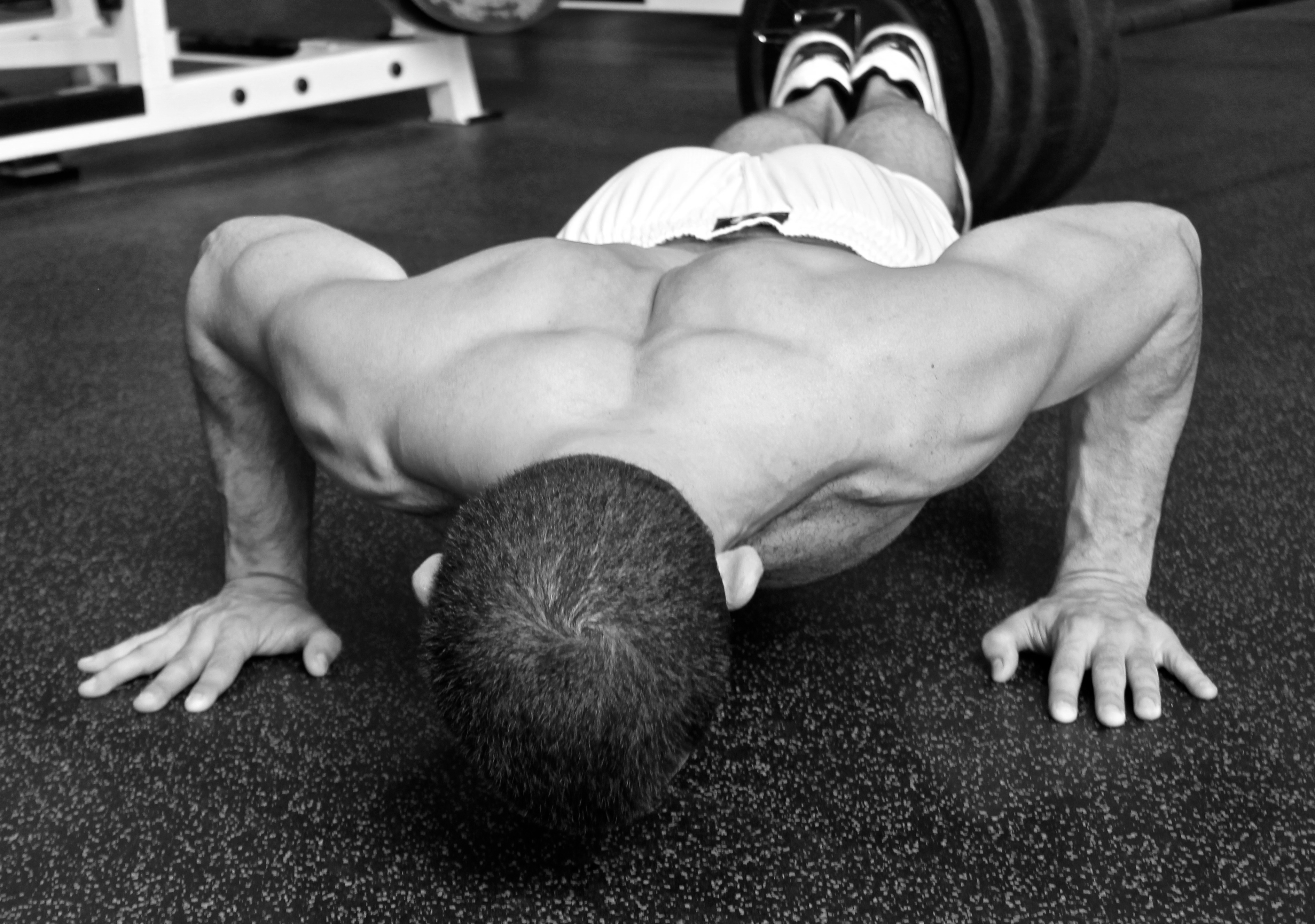
  • You Probably Don’t Use This Style of Training But You Should

    You Probably Don’t Use This Style of Training But You Should

    In this article you will learn…

    1. What tempo training is.
    2. How and why to utilize it.
    3. Mistakes and corrections in the application of it.

    Tempo Training: “The Break Down”

    In simple terms, coming from a musician, tempo is defined as the speed or pace of a given “piece”. In a fitness sense, it’s the speed or pace of a given “exercise”.  Although every movement we perform has a specific tempo naturally and without thinking, manipulating and/or paying attention to it is something you may benefit from.

    What do the numbers mean?

    This is how the parameters of an exercise are usually set up. Today we’re looking at the italicized tempo portion.

    Exercise: Back squats
    Sets: 5
    Reps: 3
    Rest time: 120-180 seconds
    Tempo: 6-3-2-2

    The first number (6) is the eccentric or lowering portion of the exercise: Here the muscle is lengthening while its getting worked. For example, this would be the lowering of a bar during a bench press, or the straightening of your arm while performing a biceps curl.

    The second number (2) represents the pause in between the lowering and lifting portion of the exercise. This pause usually happens between the eccentric (lowering) phase and the concentric (lifting) phase of a repetition. An example would be when the bar is nearest your chest in the bench press, or when the arm is fully extended during a bicep curl.

    The third number (3) is the concentric, or lifting portion of the exercise: The concentric contraction occurs when the muscle is shortening. Examples of this would be the pushing movement of the bar during a bench press, or the flexing (bending) of your elbow during a biceps curl.

    The fourth number (2) explains the pause at the top, if you choose to include that: The contraction happens at the end of your concentric (lifting) portion. Examples would be at the top or lockout position with the arms straight at the top of the bench press, or when your elbow is fully bent at the top of a biceps curl.

    Note:

    • If you want to use, or see someone uses an (X) it means to perform that phase of the movement as fast as possible.
    • If you want to use, or see someone uses a (0) it means you spend no time pausing at either the top or bottom of the exercise.

    Tempo training can be implemented to achieve all types of goals. You can use it too…

    Increase your strength and power

    https://www.instagram.com/p/61AbrsxMVZ/?taken-by=justinrivelli

    Increase muscle hypertrophy (muscle growth)

    You can manipulate tempo to increase things like metabolic stress (the burning feeling when you train), mechanical tension (in simple terms using the heaviest loads you can handle) and or to increase muscle damage (by using a long eccentric contraction or unfamiliar movements).

    Identify weaknesses, correct poor technique, or help with problem areas throughout an exercise. 

    By using different tempo’s (whether they are fast, paused, or slow) it enables you to see and feel certain positions and problem areas throughout the four phases of an exercise. This way you can gain better awareness of your body in space.

    Improve body control, technique, and quality of movement.

    For example if you struggle keeping a neutral spine near the bottom of a stiff legged deadlift, I could change the tempo so that you spend more time there to either create more confidence, strength, or familiarity in that position. I can even do it to give you a greater return of proper technique for the future.

    Be aware of counting too fast.

    Being a drummer my whole life I like to think I have a great sense of time and tempo. What I often notice is that because using slower tempos is challenging, people count inconsistently, and quicker than they think they are.

    So how do you fix this?

    1. You can look at or listen to a stopwatch or metronome, which sometimes can get annoying.
    2. Have someone count for you, which will require a partner.
    3. Count slower with one-one thousand, two-one thousand, three-one thousand.

    Or what I have also seen work great is…

    1. Check and re-check an actual stopwatch from time to time, to make certain you are accurately counting the number of seconds properly.
    2. Double the amount of time you want to perform, to ensure you’re counting slow enough.

    The ways you can use tempo training are endless.

    Here are a couple videos of me applying some different tempos.

    Tempo training will give you a greater appreciation of an exercise, especially if you are getting bored and need to step out of some old habits. Pick a primary goal and execute numbers appropriately. If you need help with something specific, feel free to comment or message me.