
This article is really straightforward.
I’m going to show you a simple squatting progression, so that no matter what level you are at, you are able to train this awesome movement. All this means, is that I will list some squat variations, with level one being the easiest, and level five being more challenging, so you are able to develop towards a more advanced state, gradually in stages.
Once you can perform level one comfortably with solid technique, you can move onto level two. Once you can execute level two with good form, you are able to jump up to level three, and so on. Depending on the person, the order of these may need to be changed around a bit, but generally speaking this sequence will serve the majority of the population quite well.
Note: Even though you may be advanced enough to perform every level, that doesn’t mean you should only implement the most advanced variation. Things like your injury history, goals, structure, or pervious program etc. should all be taken into consideration. Let’s begin.
Level One: Bodyweight Squats
Side view
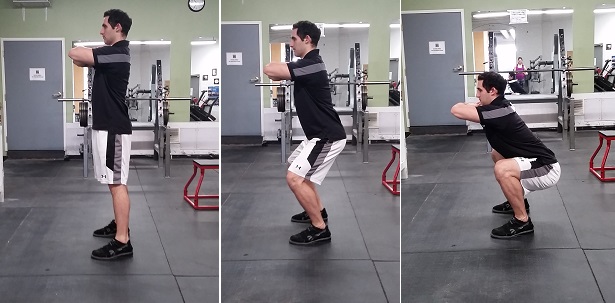
Front view

Level two: Goblet Squats
Side view
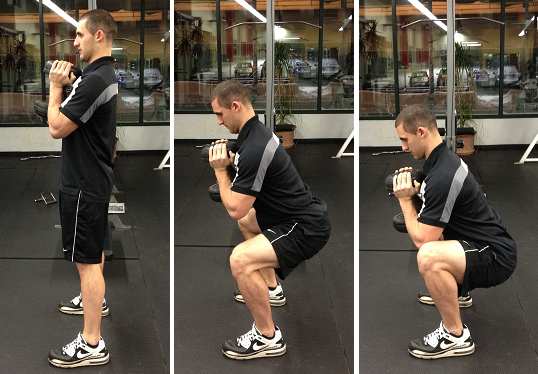
Front view
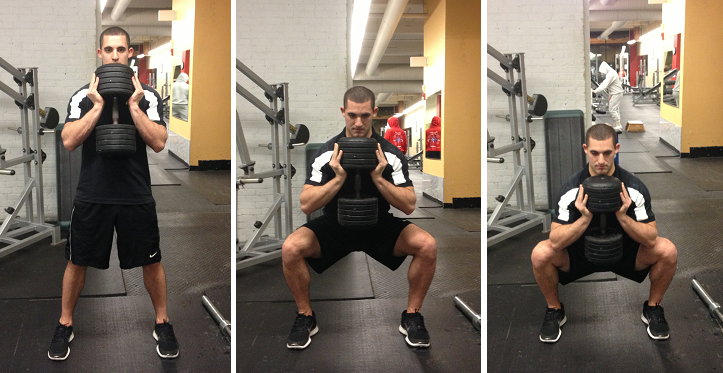
Level three: Front Squat
Front view
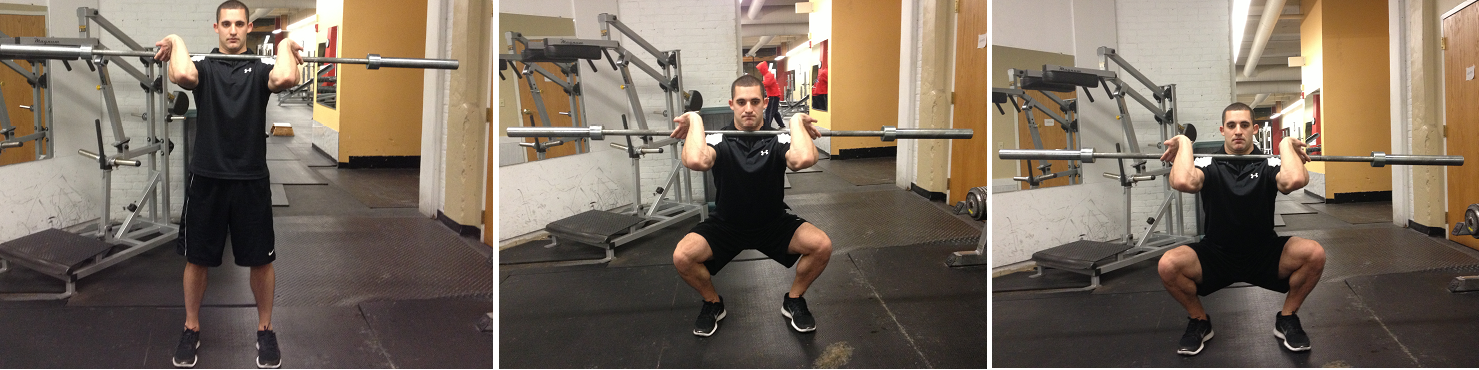
Side view
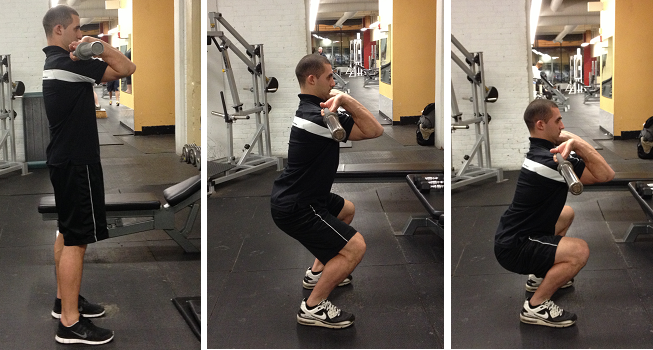
Level three: Barbell back squat
Side view barbell back squat

Front view barbell back squat

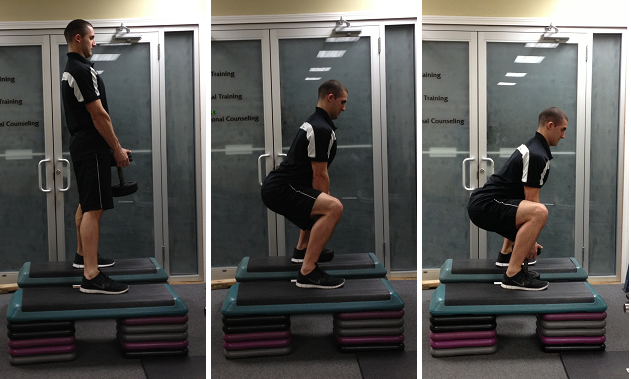
Level five: Increase range of motion dumbbell squat
Front view
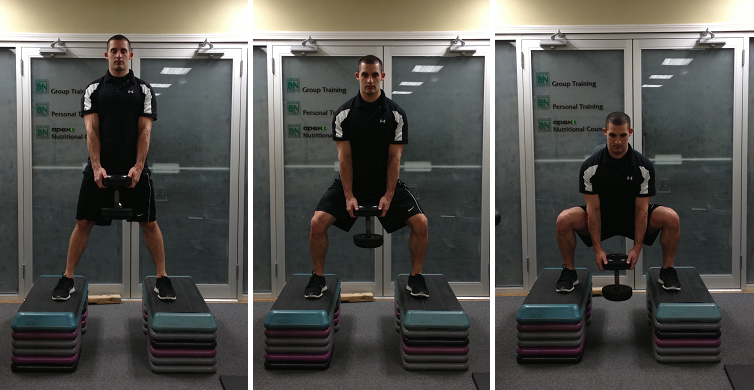
Side view
I find this to be a very simple, yet logical squatting progression, no matter what client I come across. There are many more styles and variations of squats you can implement and choose from, however I included these basic five so you do not feel overwhelmed. The squatting scale above provides you with a series of exercises, so you can improve upon this movement in a safe and productive manner. Again, as long as you are able to maintain good technique with a previous level, you are warranted to move to the next.


Leave a Reply