Year: 2014

  • Is Gluten About to Go Extinct? Fear Not?

    Is Gluten About to Go Extinct? Fear Not?

    -We demonize then we empathize…over, and over, and over again.

    After watching a recent TED Talks video where Jon Mooallem explains “The Strange Story of the Teddy Bear”, I recognized a sentence he emitted during the speech that transfers over to what I believe happens in the health and fitness world repeatedly. I know this sounds elementary but he said, “We demonize then we empathize”.

    I modified and shifted this sentence into the world of “well-being” so let me explain what I mean with a rather “live” hot topic so the majority of the population can understand.

    Gluten is about to go extinct.

    Or so it feels this way. We all know it’s not hard to find someone who is either going gluten free because they have (or say they have) celiac disease, some other type of gluten intolerance, sensitivity, ataxia, or dermatitis herpetiformis when consuming it.

    I’m not uttering whether these people do or don’t have a gluten “problem” or should or shouldn’t stay away from it, but this protein composite is getting beat up pretty badly. I’m also not going to get into the actual prevalence of these “cases” because it is out of the context of this article.

    Instead let’s take this rant into an entirely different frame of reference. But first we must notice gluten hasn’t been knocked out just yet and it’s still standing on one leg, just like everything else we demonize. But before we move on let’s look at one more food example so I am sure we are on the same wavelength.

    • About thirty years ago fats were demonized and the word on the street was that fat makes us fat.
    • Around ten years later we started to empathize and understand the importance of some fats, particularly omega 3’s, but still thought saturated fat clogged our arteries.
    • Ten years later we stopped seeing saturated fats as the devil and it started getting some praise.

    What’s my point and why am I telling you this?

    There are different dimensions to how we think about things. The “findings of” or “stories in” health, religion, politics, or anything else in the world are shaped by the people, times, and places in which we are presenting them. By looking at the revolution of fats and now gluten (there are many more “fitness” and real world examples than this) you can see this same cycle playing out over and over again.

    It seems like we are always stuck between demonizing a training or nutrition philosophy and wanting to wipe it out, but then when we get close to doing that or realizing we could be wrong, we empathize with it as an underdog and want to show it compassion.

    When we realize we don’t have to be fearful of it anymore is when it becomes our friend again. We employ our mastery, then we are uneasy with how limited our knowledge actually is.

    Jon Mooallem deserves credit for the structure of the three paragraphs above. All I have done is have revamped his idea of “The Story of the Teddy Bear” and put my own health and fitness spin/meaning behind it.

    Should we get a grip?

    Just look at the popular or even  most “cerebral” fitness sites now. Most were bashing things like CrossFit, high carbohydrates, or certain exercises but are now apologizing for doing so. For example most were saying to “train muscles not movements, eat six meals a day, to perform intermittent fasting etc.”, but are now coming around to respect the possible benefits of training muscles through isolation, are open to eating different amounts/percentages of certain foods, and are also unblocking their strong stance on the set in stone frequencies of feedings etc.

    We need to try and talk the same language as our “foreign” counterparts, with or without science or anecdotal evidence.

    Consider this…

    Hearing or experiencing things like “No, I really lost fat cutting out fat, look at my before and after pictures” doesn’t necessarily mean less fat intake was the cause of body fat reduction. There are too many inconsistencies and variables. Merely expending more energy throughout the day, consuming less calories because of the decreased fat intake, or being more aware of what you are consuming could be the cause of getting leaner. What you believe or think, could be, but isn’t always correct.

    Reading about a topic, even if it’s in a well-respected journal article, could be very misinforming, have been performed poorly, or have no application to the real world. I won’t get into specific examples because I could talk about them for hours and want to stay on track. But even so we can learn there are pros and cons from even the worst and best of research.

    Moral of the story.

    The idea behind this post is so that you don’t just go thinking, telling, and then deprecating something no matter how crazy or obvious it may seem. If you have heard something, read something, or have even seen or experienced something it doesn’t mean it’s true.

    We demonize a chosen “topic”, almost wipe it out (of our heads or culturally), empathize, and then it becomes closer to us. As you can see this statement goes a lot deeper than just a silly string of words. There are too many wavering unknown conditions to pummel something or someone just because you have read, heard, experienced or don’t believe in it. On another note, people may have different goals than you, may not be as disciplined as you to do something, and may not care as much as you. Since I don’t know how to conclude this any better…

    In my next post I am going to talk about “fitness findings” I have had the last 10 years of my training/dieting and throughout my life. It includes both coaching and in the trenches experience. Have a good day:)
  • How to Assesmble a “Gym Bag” Better Than Your Trainer

    How to Assesmble a “Gym Bag” Better Than Your Trainer

    In this article you will learn…

    • How to assemble a phenomenal gym bag.
    • Why I recommend one.
    • A list of items important for you to consider taking with you that you may not have thought of, or needed to be reminded about.

    No, you don’t have to carry anything to the place you are training at to feel safe or to have a successful workout. But if you want to be prepared for an emergency situation and or avoid that “I knew I forgot something!” moment it’s a good idea to assemble a gym bag.

    As coach and health professional, I believe it is my personal responsibility to be prepared for any situation I can be whether I’m dealing with a client, myself, or anyone else in need of help or assistance. Since I spend so much time working with others, training myself, and seeing so many different people walk in and out gym that I don’t know, I would rather feel confident knowing I have the tools and supplies necessary.

    Why is this important??? To start, I have personally seen…

    1. Some pretty serious acute injuries and open wounds like bloody shins and noses, ripped calluses, bruises, muscle strains, sprains, tears and spasms etc.
    2. Fainting, low blood sugar, vomiting, extreme dizziness, and nausea etc.
    3. Bodily fluids on barbells, floors, in bathrooms, locker rooms, and other parts of facilities.
    4. People urinate in unfavorable places like on couches in the sitting areas.

    It’s only the rare cases we cannot help, like the aortic rupture I saw a couple of months ago which requires a phone call for specialized, immediate, professional medical attention. We can’t prevent, treat or stop things like this from getting worse but there are many cases we can. We all know preventing what we are able to is better than having to diagnose or treat an undesirable outcome.

    I will not get into training technique, proper nutrition, or any other prevention strategies as this post is strictly about what to put in your gym bag. Take a look below to get an idea of what you might not of thought about or to remind you how awesome a good bank of supplies is. I put things into categories and gave females an extra section. Also note I made this is more for coaches, but I believe everyone should have most of these things available to them at all times.

    Gym tools:

    • Any special training equipment you wish
    • Chalk
    • Manual therapy/self-massage stuff (foam rollers, lax balls, tennis balls)
    • Monster bands
    • Mini bands
    • Gloves
    • Straps
    • Belt
    • Stopwatch (on phone hopefully!)
    • Training notebook/log (don’t forget pen/pencil etc.)
    • Music/headphones

    Peri-workout nutrition:

    • Extra water bottle
    • Extra protein shaker
    • Electrolytes

    Random:

    • Lock
    • Gym card if not on keys
    • Spare cash
    • Phone charger

    Hygiene:

    • Towels
    • Shower shoes
    • Deodorant
    • Toothbrush
    • Toothpaste
    • Floss
    • Shampoo
    • Conditioner
    • Body wash
    • Shaving cream
    • Razor
    • Lotion
    • Extra pair of clothes
    • Etc.

    First aid: A first aid kit is great, but if you don’t have one, get things like…

    • Elastic bandages in assorted sizes
    • Athletic tape
    • Gauze
    • Paramedic or EMT shears (scissors)
    • Adhesive tape
    • Oral thermometer
    • Sterile surgical gloves (also bring non latex, synthetic, nonpermeable gloves for those that may be allergic)
    • Glutose (oral liquid glucose) paste tube to treat a hypoglycemic or low blood sugar reaction
    • Electrolytes
    • Epi-pen
    • Sterile eye wash
    • Any special eye medications and dressings for those that wear contacts

    Extra for females: 

    • Hair brush
    • Makeup bag
    • Tampons/pads
    • Straightener or curling iron
    • Sports bra
    • Hair ties

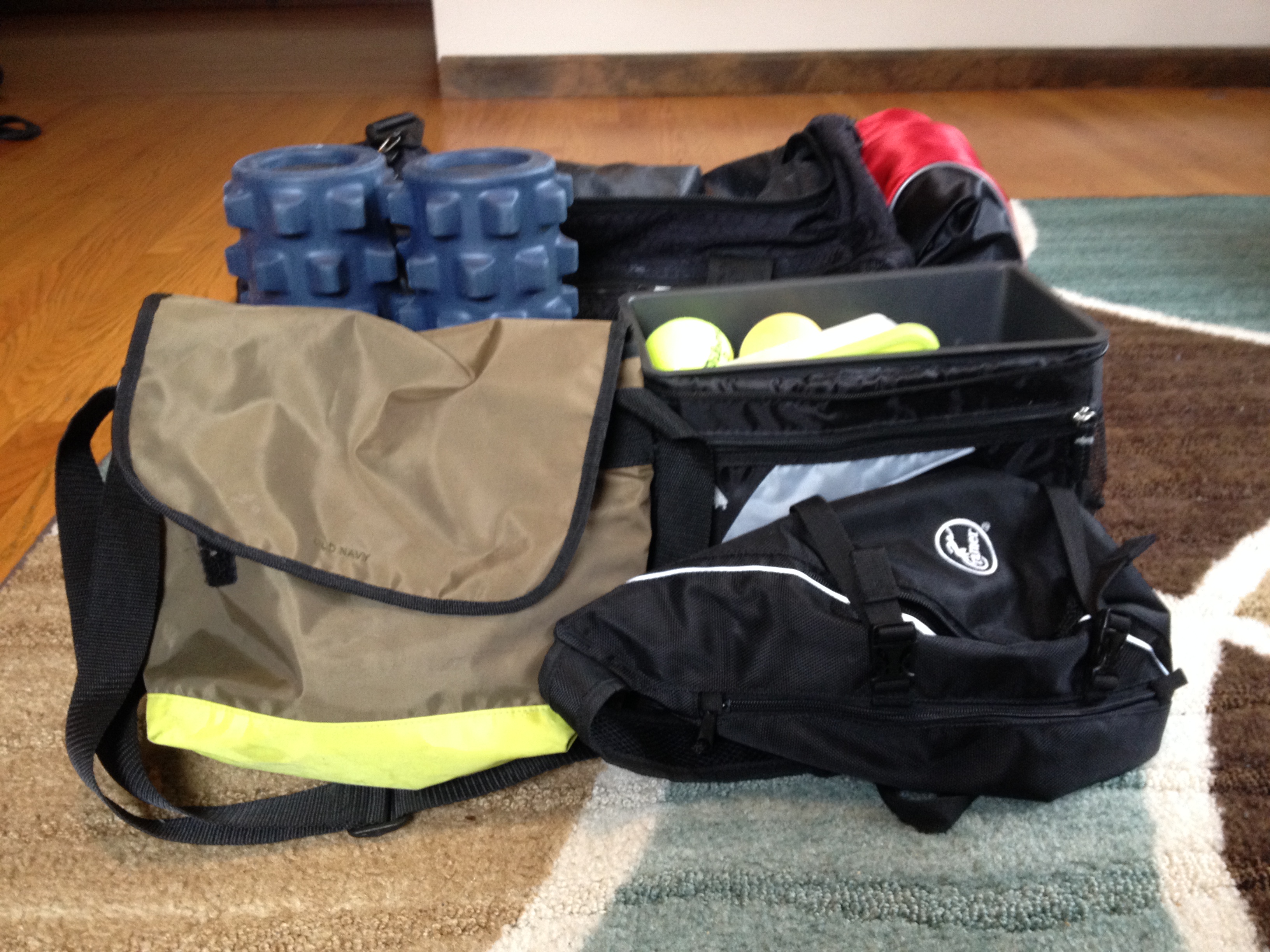
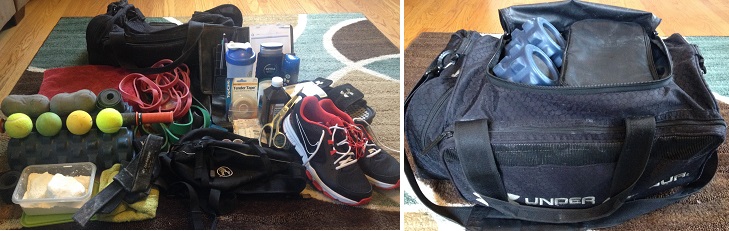
    Even with all of this “stuff”, it fits really nicely when you know how to put a gym bag together. Take a look at mine and see what I mean…

    Bag for site


    To get your bag looking like mine:), a few extra tips that are extremely simple and helpful to keep your bag neat and clean avoiding a dirty, smelly, disaster include…

    1.   Buy a bag you can wash and that is big enough to hold what you need.
    2.  Use smaller bags (I use lunch bags etc.), a shower caddy, and things like toothbrush holders as mini organizers.


    3.  Keep your bag in your trunk, office or wherever will allow you to just up and go.
    4.  Purchase separate or smaller size items to store in your bag so you don’t have to take them in and out every time you go to the gym.

    While it’s not mandatory, it is very useful to  have access to the tools you need, or to even be prepared for a potentially harmful situation while undergoing any type of training or physical activity. I don’t just recommend this post for trainers, coaches of sports teams, or for the average gym goer, but to everyone and anyone. Extra supplies can only help you have a more safe, effective, and successful training session.

  • Fix Your Push-Up Technique With This Simple Progression

    Fix Your Push-Up Technique With This Simple Progression

    In this video I talk about…

    1. Some of the most common mistakes of the push up I come across.
    2. How to fix them.
    3. One of the simplest, yet most effective push up progressions ever.

  • Is This Common Triceps Extension Mistake Actually Correct?

    Do the elbows really have to stay stationary when doing any sort of triceps extension?

    We all know the triceps extend or straighten the elbow, but we often forget it extends the shoulder as well. See what I am talking about in the video below and figure out how you can get more out of any triceps exercise.

    https://www.youtube.com/watch?v=coAuzPshMuk

    While we’re on the subject of the triceps, I’ll show you an easier way to set up for either cable or free weight skull crushers.

  • After Watching This Video You Will Never Do Pullovers The Same Again

    After Watching This Video You Will Never Do Pullovers The Same Again

    I figured it’s time I start talking on camera, so in these videos you will learn…

    • How to perform the pullover correctly.
    • A new version of the pullover.
    • How to regress the pullover if you don’t have the mobility, and why I love them with cables on the floor.

    If the videos below help you or someone that you believe could benefit from them, subscribe to my channel, like it, and or share these wherever you wish. I don’t think you will ever do a pullover of any sort the same again after watching!

    https://www.youtube.com/watch?v=GmzZe9jkh9Q

    https://www.youtube.com/watch?v=qssAnxGsFjk

  • Six Weeks to Strong, Shredded, & Sexy (The 1-2-3-4 Training Program): Outro & Day 5

    Six Weeks to Strong, Shredded, & Sexy (The 1-2-3-4 Training Program): Outro & Day 5

    In this post I will show you…

    1. How you should structure the 1-2-3-4 training program according to your weekly schedule.
    2. What you can do on day five if you want to add in an extra day.
    3. If you missed any of the other days I have linked them at the end of the article.

    What should I do for day five?

    For day five you can perform “accessory” work, train muscle groups  that need extra attention or mobility work, or even do a complex or some conditioning. Below is a complex you can feel free to use if you wish. It’s harder than it looks.

    Here is a sample barbell complex.

    A1) Push Press
    A2) Single Leg Deadlift (left side)
    A3) Single Leg Deadlift (right side)
    A4) Front Loaded Reverse Lunges
    A5) Double Leg Romanian Deadlift

    Ground rules of the complex:

    1.  Five reps of each exercise
    2.  Do not put the bar down in between exercises
    3.  Rest and repeat 2-3 more times.

    Note: Go through the complex a couple times with light weight for a warm up first. Also, pick a weight that is challenging for five reps on the exercise you are weakest at.

    How should I structure “The 1-2-3-4 training Program” according to my weekly schedule?

    5 Days a Week Program

    Day 1: Lower Body Day One
    Day 2: Upper Body Day One
    Day 3: Off/”Core”/Conditioning
    Day 4: Lower Body Day Two
    Day 5: Upper Body Day Two
    Day 6: Accessory/Complex
    Day 7: Off/”Core”/Conditioning

    4 Days a Week Program

    Day 1: Lower Body Day One
    Day 2: Upper Body Day One
    Day 3: Off/”Core”/Conditioning
    Day 4: Lower Body Day Two
    Day 5: Off/”Core”/Conditioning
    Day 6: Upper Body Day Two
    Day 7: Off/”Core”/Conditioning

    Or…

    Day 1: Lower Body Day One
    Day 2: Off/”Core”/Conditioning
    Day 3: Upper Body Day One
    Day 4: Off/”Core”/Conditioning
    Day 5: Lower Body Day Two
    Day 6: Upper Body Day Two
    Day 7: Off/”Core”/Conditioning

    3 Days a Week Program

    Week 1,3, and five

    Day 1: Lower Body Day One
    Day 2: Off/”Core”/Conditioning
    Day 3: Upper Body Day One
    Day 4: Off/”Core”/Conditioning
    Day 5: Lower Body Day Two
    Day 6: Off/”Core”/Conditioning
    Day 7: Off/”Core”/Conditioning

    Weeks 2, 4, and 6

    Day 1: Upper Body Day Two
    Day 2: Off/”Core”/Conditioning
    Day 3: Lower Body Day Two
    Day 4: Off/”Core”/Conditioning
    Day 5: Upper Body Day One
    Day 6: Off/”Core”/Conditioning
    Day 7: Off/”Core”/Conditioning

    2 Days a Week Program

    For this routine, an optimal set up would be a couple days between each other. If you can’t do so and are on a really tight schedule that is fine, that’s why it’s for two days a week.

    Weeks 1, 3, and 5

    Day 1: Upper Body Day One
    Day 2: Off/”Core”/Conditioning
    Day 3: Off/”Core”/Conditioning
    Day 4: Lower Body Day One
    Day 5: Off/”Core”/Conditioning
    Day 6: Off/”Core”/Conditioning
    Day 7: Off/”Core”/Conditioning

    Day 1: Upper Body Day Two
    Day 2: Off/”Core”/Conditioning
    Day 3: Off/”Core”/Conditioning
    Day 4: Lower Body Day Two
    Day 5: Off/”Core”/Conditioning
    Day 6: Off/”Core”/Conditioning
    Day 7: Off/”Core”/Conditioning

    That concludes the 1-2–4 training program. As mentioned you can perform this program for six weeks, then even do another cycle to see some extra gains once you adapt to it. If you do this right it’s harder than it looks.

    If you missed the videos, here they are…

    Day One

    https://www.youtube.com/watch?v=6Yqgl7gU6Qk

    Day Two

    http://www.youtube.com/watch?v=yBUx7jJvCCk

    Day Three

    http://www.youtube.com/watch?v=A8wN4FJCaI0

    Day Four

    http://www.youtube.com/watch?v=HB2pR5SWt_Q

  • The 1-2-3-4 Training Program: Day 4

    The 1-2-3-4 Training Program: Day 4

    https://www.youtube.com/watch?v=HB2pR5SWt_Q

    For more information about this training program, click here for the introduction and day one. You can also see the complete video above. Very quickly I will remind you that in the 1-2-3-4 training program you will..

    1. Perform one exercise, then rest and repeat until all your sets are completed.
    2. Perform a superset (two exercises in a row with minimal to no rest in between exercises) and repeat until all your sets are completed.
    3. Perform a tri-set (three exercises in a row with minimal to no rest in between exercises) and repeat until all your sets are completed.
    4. Perform a giant set (four exercises in a row with minimal to no rest in between exercises) and repeat until all your sets are completed.

    Day Four: Upper Body (Chest, Vertical Pulling/Back)

    A1) Plyometric Push Ups: Chest (Explosive)

    Exercise substitutions: Any explosive or speed horizontal push. (Med ball pushes, speed bench, ballistic bench press etc.) 

    plyo pu

    Sets: 5
    Reps: 3-5
    Rest between sets: 90 seconds

    Perform the exercise above with 90 seconds rest between sets. Repeat until your sets are completed, then move onto the “B” exercises.

    B1) Incline Barbell Bench Press: Chest (Strength/Hypertrophy)

    IBP site

    Exercise substitutions: High or low inclined dumbbell, barbell, or smith machine bench press) 

    Sets: 4
    Reps: 6-8
    Rest between sets: none go right into B2)

    B2) Lat Pulldown: Lats (Strength/Hypertrophy)

    Exercise substitutions: Any vertical pulling variation (Chin ups, pull ups, lat pulldowns etc.)

    lat site

    Sets: 4
    Reps: 8-10
    Rest between sets: 120 seconds

    Perform the two “B” exercises above in succession. Rest 120 seconds and repeat until your sets are completed. Then move onto the “C” exercises.

    C1) Flat Dumbbell Pec Fly’s: Chest (Isolation)

     Exercise substitutions: Dumbbell or cable chest fly variations etc. (Any horizontal adduction movement)

    pec site

    Sets: 3
    Reps: 12-15
    Rest between sets: None right into C2)

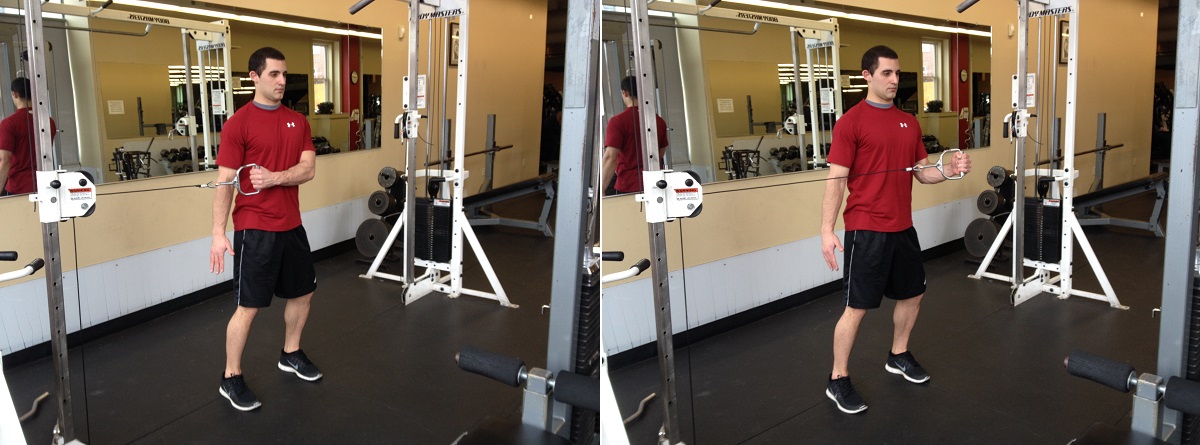
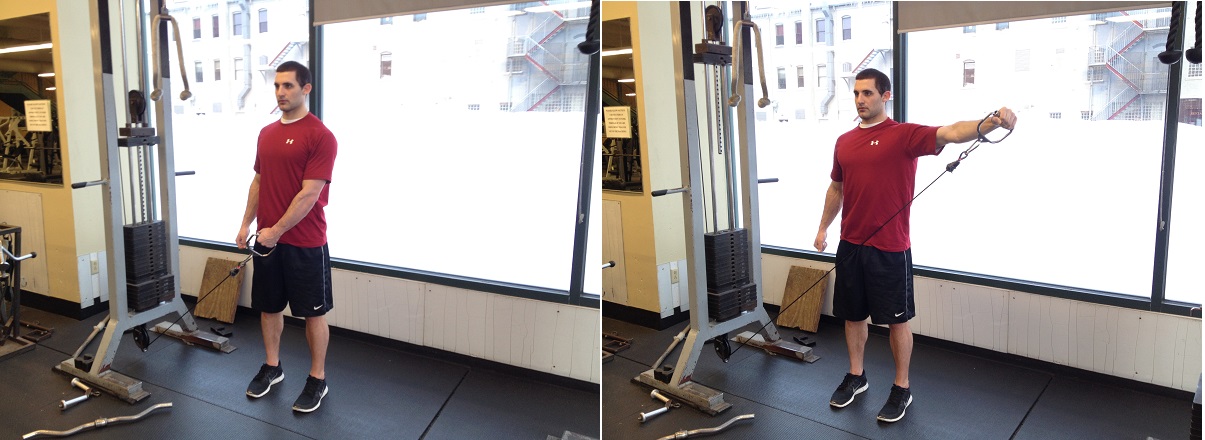
    C2) Shoulder External Rotation with cables: Shoulder cuff (external rotators)

     Exercise substitutions: Cable or dumbbell shoulder external rotation exercises etc.

    Ext rot site

    Sets: 3
    Reps: 12/side
    Rest between sets: None right into C2)

    C3) Problem area or lat stretch

    IMG_4759[1]

    Sets: 3
    Timed set: 60 seconds/side
    Rest between sets: 90 seconds

    Perform the three “C” exercises above in succession. Rest 90 seconds and repeat until your sets are completed. Then move onto the “D” exercises.

    D1-D4) Push up/pullover repeat

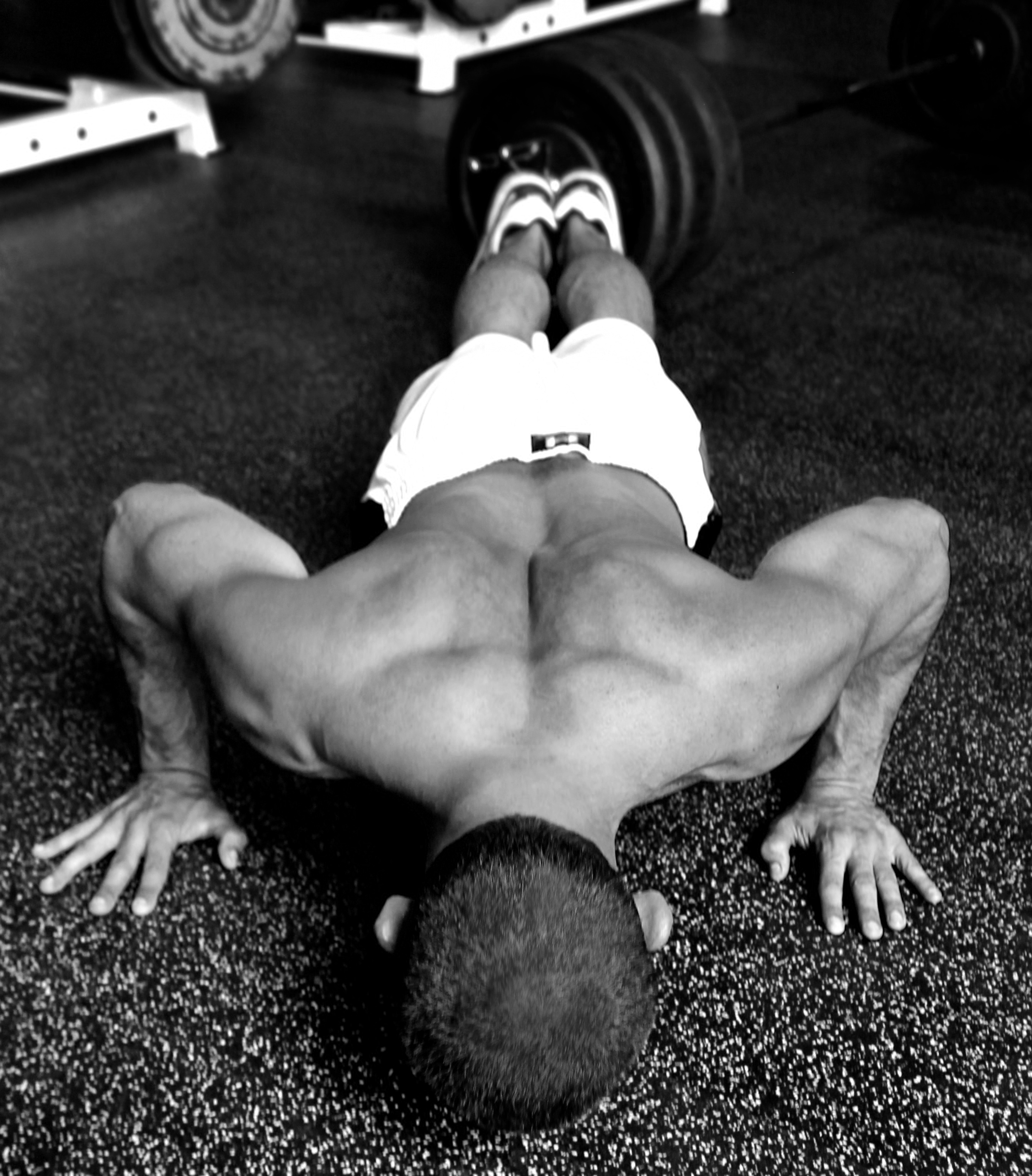
    D1) Push ups: Weighted if needed (30 seconds)

    push up site

    D2) Dumbbell pullovers: (10 reps)

    pullovwr site

    D3) Push ups to down dog: (30 seconds)

    p to p

    D4) Dumbbell pullovers: (10 reps)

    pullovwr site

    Ground rules

    • Perform the recommended amount of time/reps for each exercise.
    • Take minimal to no rest between each.
    • Rest 60 seconds after all 4 exercises are completed.
    • Repeat 1-2 more rounds.

    If you want or need a specific warm up, feel free to do this. It is shown quickly in the video above as well…

    Self massage (5 minutes)

    In general, roll each area for about thirty seconds to two minutes or more. Since I cannot assess you, stay on the areas that need the most work you will stay on the longest. If you have no idea what those are, do this.

    1. Foam Roll Upper Back/Thoracic spine: Or Problem Area #1

    t spine

    2. Foam Roll Lats: Or Problem Area #2

    Foam roll lats

    3. Lacrosse Ball Pecs: Or Problem Area #3

    pecy

    Ultra fast warm up (5 minutes) 

    1. Side lying windmill x7 reps/side

    Side lyng windmill site

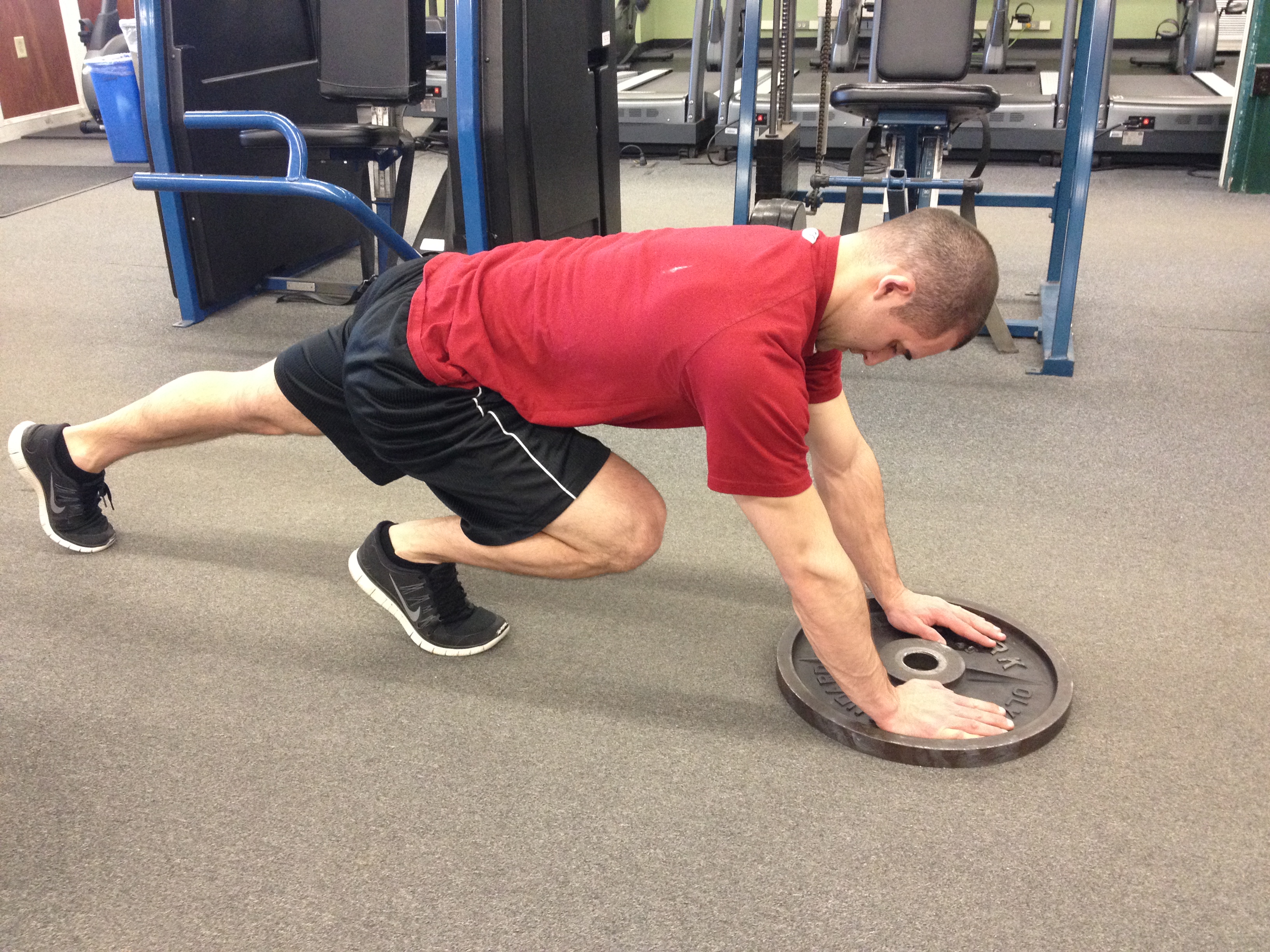
    2. Extended or regular front plank to push back x7 reps

    p to p

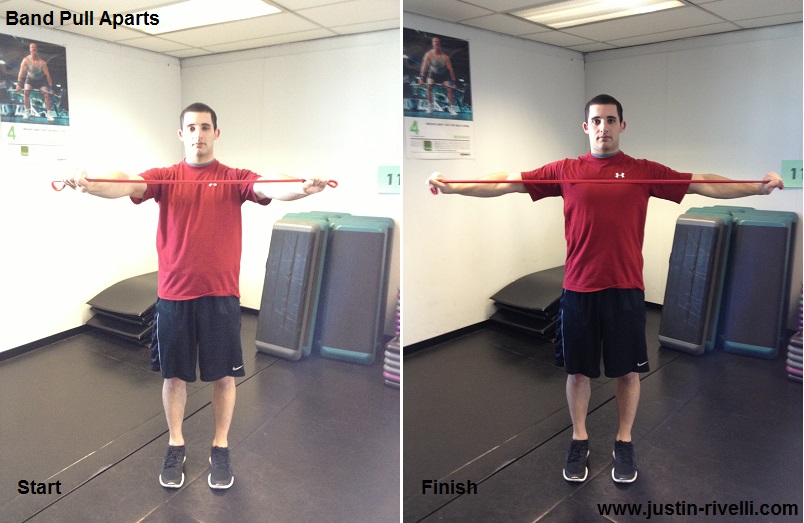
    3. Band pull aparts x7 reps

    BPAAA

    Also note: With each exercise don’t jump right into the weight you will be working with. Gradually increase the resistance with some “warm up sets” before performing and getting into the “working sets”.

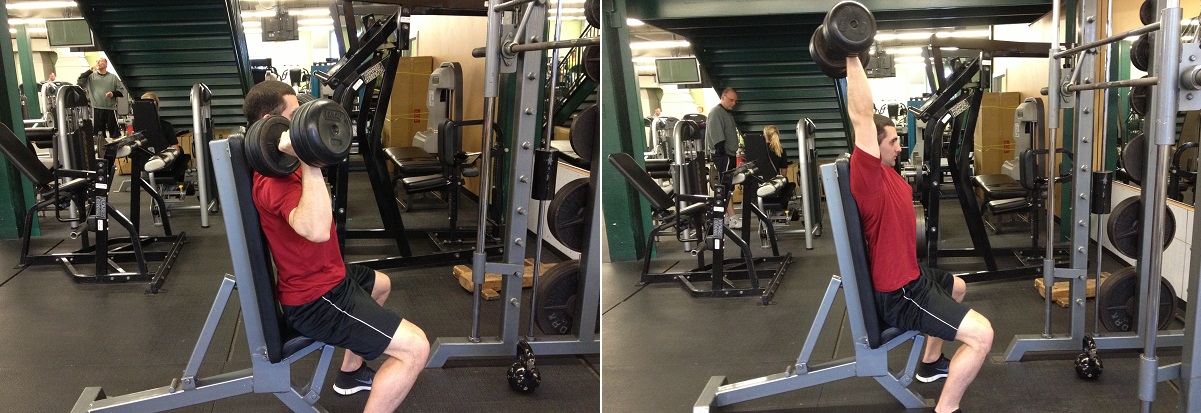
    For example let’s use the seated dumbbell overhead press. Let’s also say you have 4 sets of 8 reps assigned. Start with light dumbbells, then grab heavier ones each set. Once you progress to a weight that is challenging for 6 reps, this would count as your first set. Then you would have three more at that weight according to the above protocol.

    Thanks for reading and watching!

  • The 1-2-3-4 Training Program: Day 3

    The 1-2-3-4 Training Program: Day 3

    http://www.youtube.com/watch?v=A8wN4FJCaI0

    For more information about this program, click here for the introduction and day one. While were on the subject here is day two, and here is day four. 

    Very quickly I will remind you that in the 1-2-3-4 training program you will..

    1. Perform one exercise, then rest and repeat until all your sets are completed.
    2. Perform a superset (two exercises in a row with minimal to no rest in between exercises) and repeat until all your sets are completed.
    3. Perform a tri-set (three exercises in a row with minimal to no rest in between exercises) and repeat until all your sets are completed.
    4. Perform a giant set (four exercises in a row with minimal to no rest in between exercises) and repeat until all your sets are completed.

    Day Three: Leg Day (Quadriceps, Hamstrings, Core)

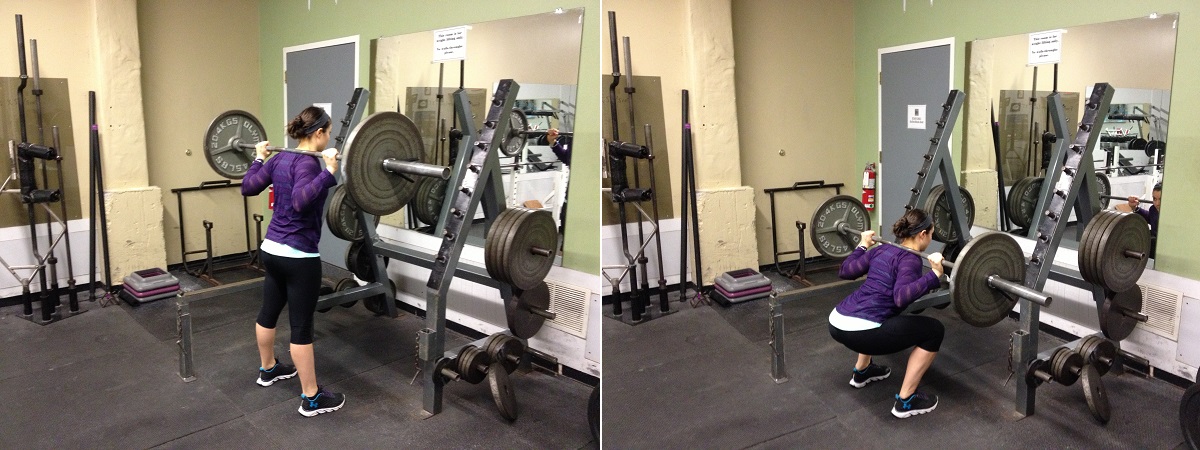
    A1) Barbell back squats: Lower Body Strength

    Exercise substitutions: Any bilateral squat variation (Box squats, front squats, etc.)

    suats site

    Sets: 5
    Reps: 5
    Rest between sets: 90 seconds

    Perform the exercise above with 90 seconds rest between sets. Repeat until your sets are completed, then move onto the “B” exercises.

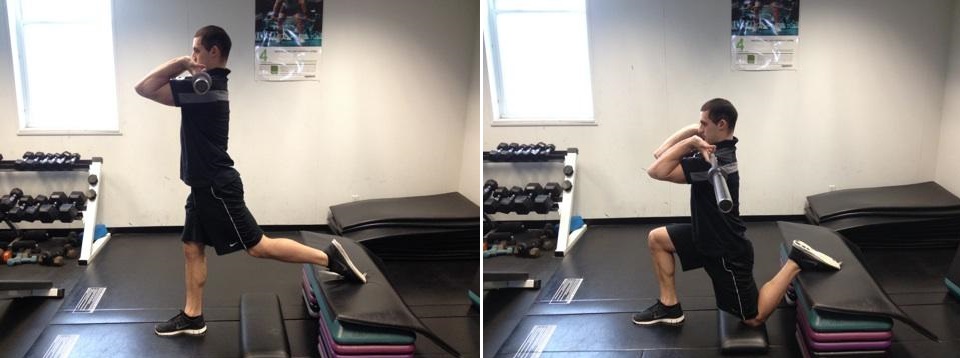
    B1) Front Loaded (Rear Leg Elevated) Split Squats: Glutes, Quads & Hamstrings (Strength)

    Exercise substitutions: Any stationary single leg lower body exercise. (Split squats, single leg squats, etc.)

    ss site

    Sets: 4
    Reps: 6-8/side
    Rest between sets: none go right into B2)

    B2) Side Plank: Core (Anti lateral flexion)

    Exercise substitutions: Any anti lateral flexion exercises. (Side plank variations, off set farmers walks, etc.)

    Side Plank

    Sets: 4
    Reps:  30 seconds/side
    Rest between sets: 120-180 seconds

    Perform the “B” exercises above with 120-180 seconds rest between sets. Repeat until your sets are completed, then move onto the “C” exercises.

    C1) Dumbbell Walking Lunges: Quadriceps, glutes, hamstrings, adductors. (Hypertrophy)

    Exercise substitutions: Any single leg dynamic, transfer, or “moving” movement. (Any walking, reverse, etc. lunge variations, stair climbing etc.)

    WL sitey

    Sets: 3
    Reps: 10-12/leg
    Rest time: none right into C2)

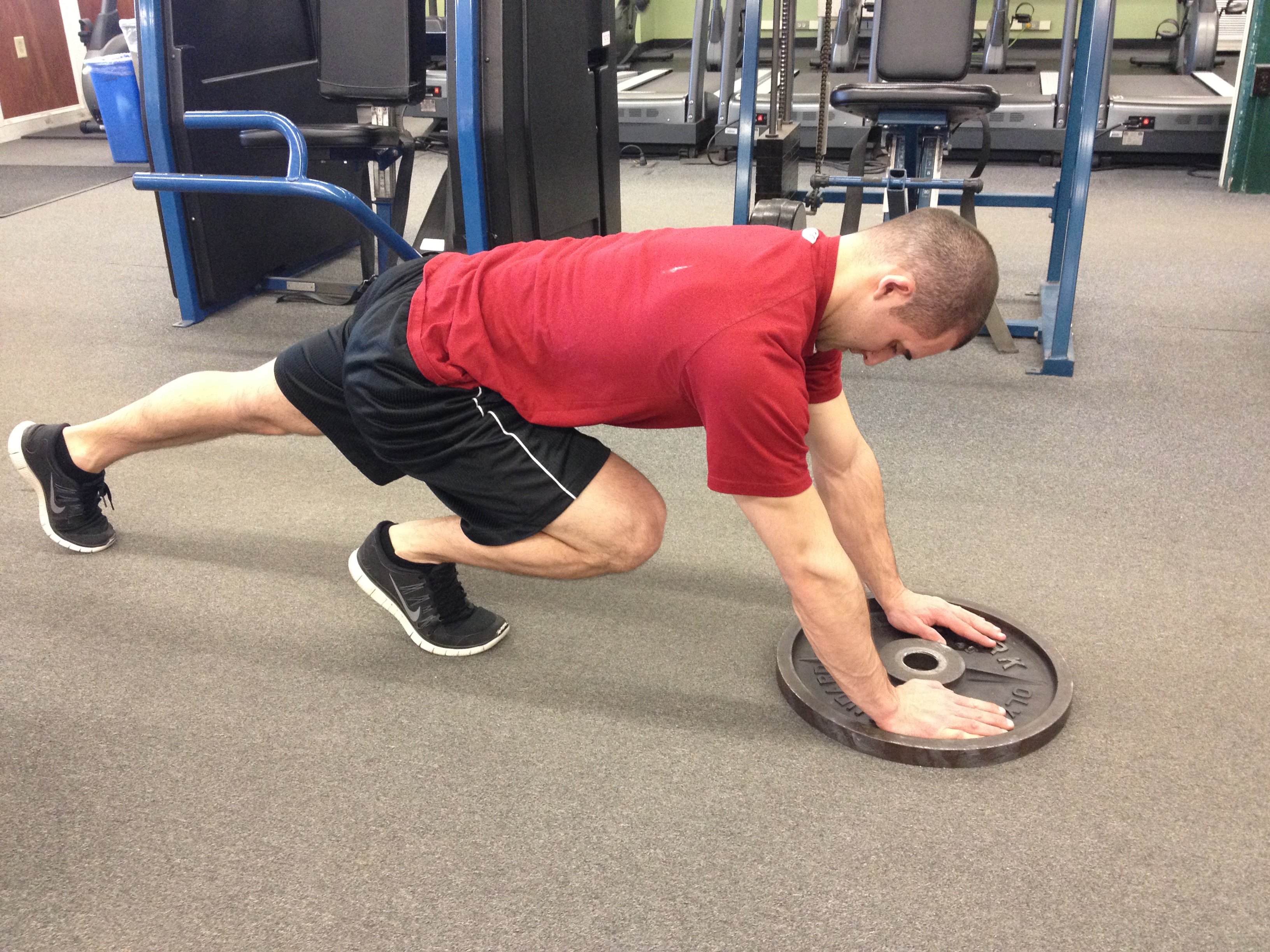
    C2) Slow Plate Pushes: Quadriceps (Hypertrophy/Endurance)

    Exercise substitutions: Any knee or quadriceps dominant movement. (Sled or tire drag variations, leg extensions, etc.)

    PUSH

    Sets: 3
    Reps: 40-60 yards
    Rest time: None right into C3)

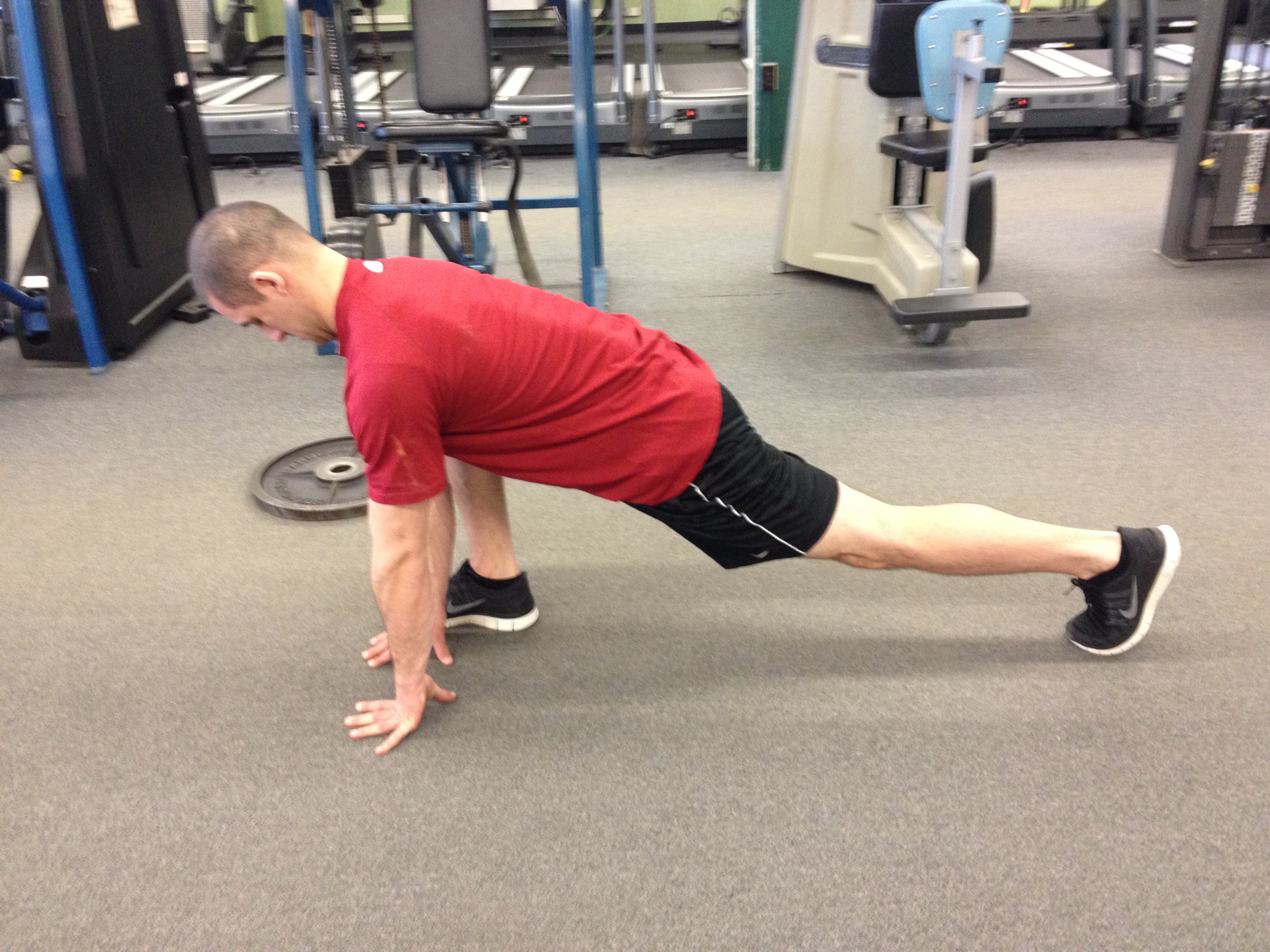
    C3) Lower Body Stretch Of Problem Area

    Exercise substitutions: Any standing calf raise variation (dumbbell, barbell, machine)

    Stretch

    Sets: 3
    Reps: 60 second hold/side
    Rest time: 120 seconds

    Perform the three  “C” exercises above in succession. Rest 120 seconds and repeat until your sets are completed. Then move onto the “D” exercises.

    (D1-D4)

    *Choose between doing one, two, or all three exercises to finish off day one.

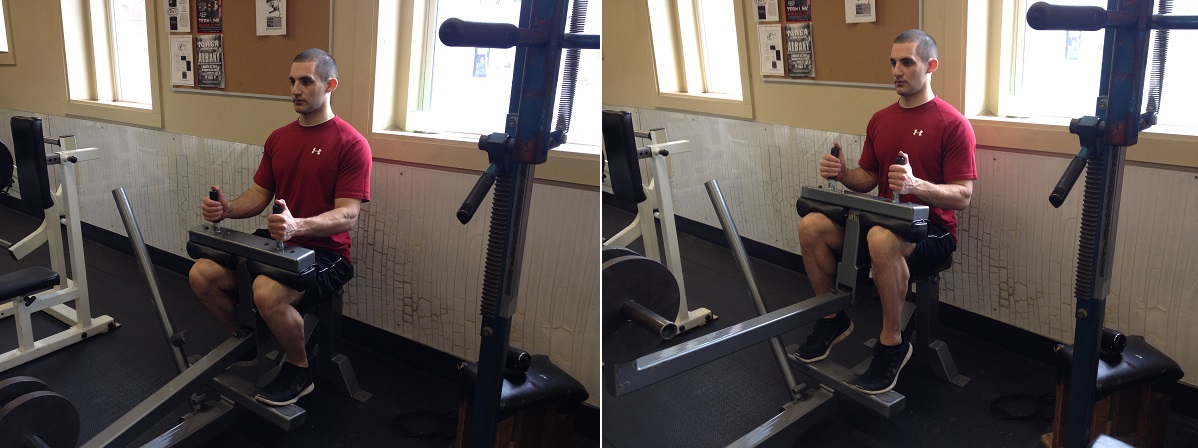
    *D1) Seated Calf Raises: (Soleous) (1 minute)

    SCR sitey

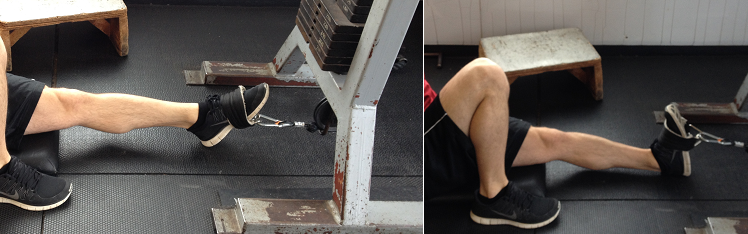
    *D2) Anterior tibilais: Cable toe pulls (left side 1 minute)

    ant tibe i

    *D3) Anterior tibialis: Cable toe pulls (right side 1 minute)

    ant tibe i

    *D4) Ab dolly rollouts (1 minute)

    Exercise substitutions: Any anti-extension exercise. Front planks, stability ball roll-outs etc. Look at this article under the anti extension category for more info.

    rollouts siteu

    *Optional: Choose between doing none, one, two, three or four of the “D” exercises above.

    • Perform the above exercises in a row with minimal rest in between exercises.
    • Complete as many reps as possible in one minute. That’s as fast as you can while keeping good technique and staying under control.
    • Then rest 60 seconds and repeat one to two more times. Once you have finished, you’re done with lower body day two.

    If you want or need a specific warm up, feel free to do this. It is shown quickly at the end of the video as well…

    Self Massage (5 minutes)

    In general, perform each area for about thirty seconds to two minutes or more. Since I cannot assess you, stay on the areas that need the most work you will stay on the longest. If you have no idea what those are, do this.

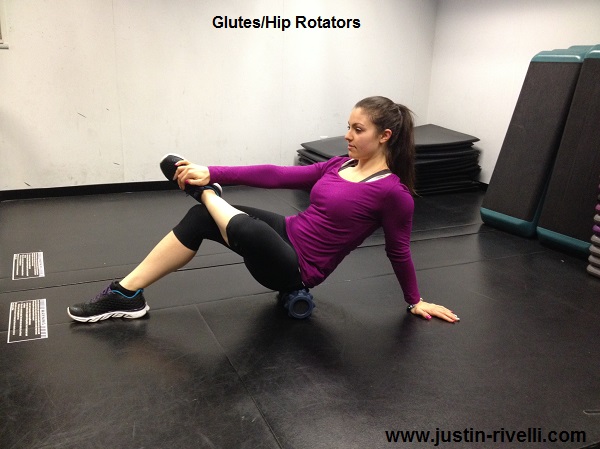
    1. Glutes/Hip rotators: Or Problem Area #1

    Glutes Hip rotators

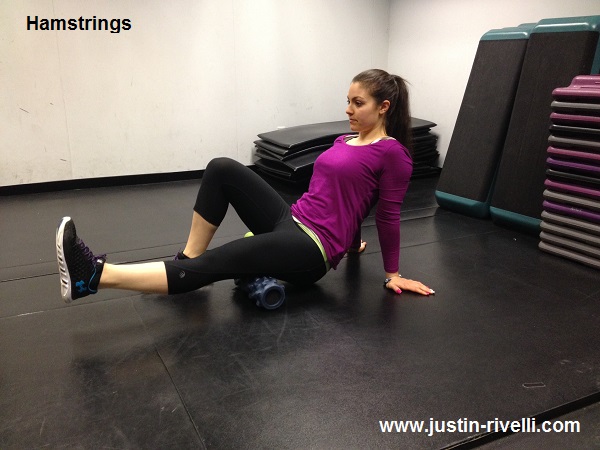
    2. Hamstrings: Or Problem Area #2

    Hamstrings

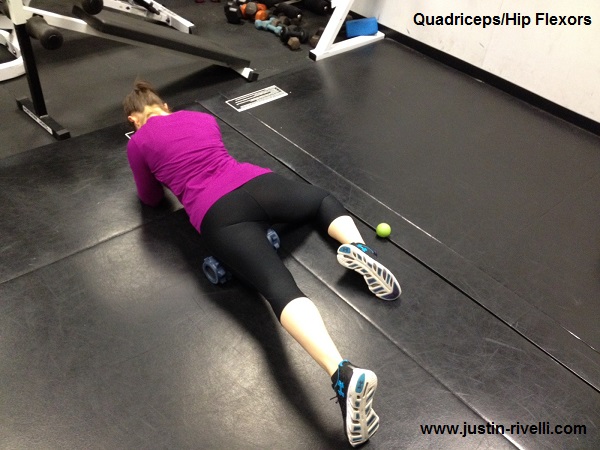
    3. Hip Flexors/Quadriceps: Or Problem Area #3

    quads

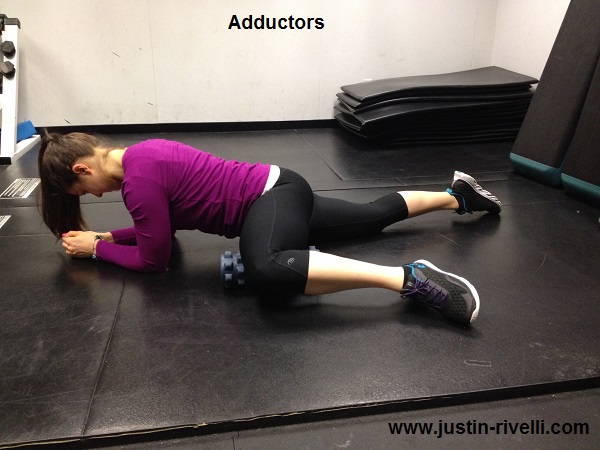
    4. Adductors: Or Problem Area #4

    adductors

    5. Thoracic spine: Or Problem Area #5

    t spine

    Ultra fast Warm Up (5 minutes)

    Lying alternating knee hugs x10/side

    knee hugs pic

    Leg lowering w/band x10/side

    llll

    Three way lunge x7/side

    3 way

     Also note: With each exercise don’t jump right into the weight you will be working with. Gradually increase the resistance with some “warm up sets” before performing getting into the “working sets”.

    For example let’s use the barbell back squat. Let’s also say you have 4 sets of 5 reps assigned. Start with an empty bar, then add on weight slowly each set. Once you progress to a weight that is challenging for 5 reps, this would count as your first set. Then you would have three more at that weight.

    That’s it! If this article gets at least 400 views I will share day four. If not I am going to hold off and put the focus on some other articles!

    If you missed it, here is day one, and day two of the program!

  • The 1-2-3-4 Training Program: Day 2

    The 1-2-3-4 Training Program: Day 2

    For more information about this program, click here for the introduction and day one. Here is day three, and here is day four. Very quickly I will remind you that in the 1-2-3-4 training program you will..

    1. Perform one exercise, then rest and repeat until all your sets are completed.
    2. Perform a superset (two exercises in a row with minimal to no rest in between exercises) and repeat until all your sets are completed.
    3. Perform a tri-set (three exercises in a row with minimal to no rest in between exercises) and repeat until all your sets are completed.
    4. Perform a giant set (four exercises in a row with minimal to no rest in between exercises) and repeat until all your sets are completed.

    Day Two: Upper Body (Shoulders, horizontal pulling/back, and all of your traps)

    A1) Push Press: Shoulders (Explosive)

    Exercise substitutions: Push press or push jerk with barbell or dumbbells, explosive landmine press etc.

    Ppp

    Sets: 5
    Reps: 3-5
    Rest between sets: 90 seconds

    Perform the exercise above with 90 seconds rest between sets. Repeat until your sets are completed, then move onto the “B” exercises.

    B1) Seated Dumbbell Overhead Press: Shoulders (Strength/Hypertrophy)

    Exercise substitutions: Handstand push ups, overhead barbell, dumbbell, or kettlebell press, landmine press etc. (standing, seated, or kneeling etc.)

    OHP

    Sets: 4
    Reps: 6-8
    Rest between sets: none go right into B2)

    B2) One Arm Dumbbell Row: Back (Strength/Hypertrophy)

    Exercise substitutions: Any horizontal rowing variation (One arm dumbbell, kettlebell or barbell row, inverted row, cable row variations etc.)

    row site

    Sets: 4
    Reps: 8-10
    Rest between sets: 120 seconds

    Perform the two “B” exercises above in succession. Rest 120 seconds and repeat until your sets are completed. Then move onto the “C” exercises.

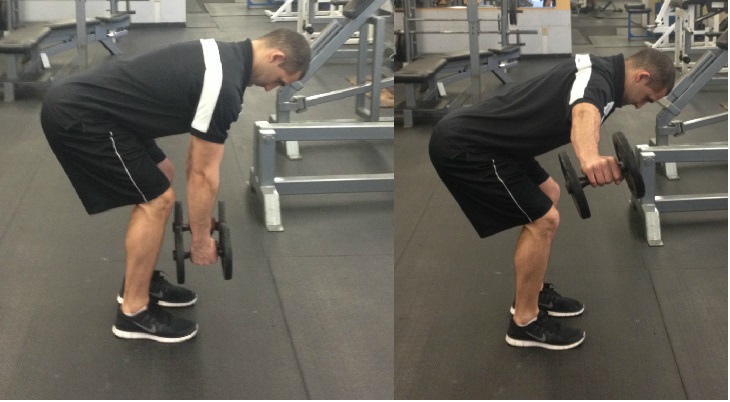
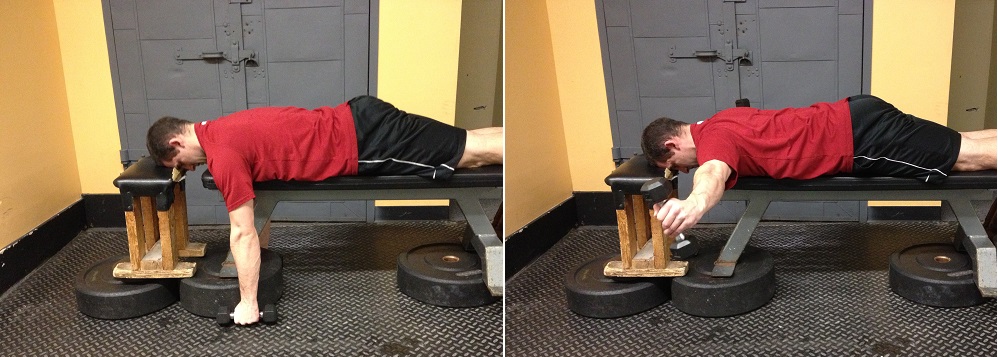
    C1) Reverse Fly’s: Rear deltoids (Isolation)

     Exercise substitutions: Rear deltoid raise or reverse fly variations etc.

    Rear Delt Raises Bottom

    Sets: 3
    Reps: 12-15
    Rest between sets: None right into C2)

    C2) Dumbbell Side Raises: Middle Deltoids (Isolation)

     Exercise substitutions: Cable  or machine lateral raise variations etc.

    midel

    Sets: 3
    Reps: 12
    Rest between sets: None right into C2)

    C3) Front deltoids and core (Closed Chain)

    Exercise substitutions: Any movement where hands are on the ground. (Bear Crawls, plank variations, hand walk variations etc.) Don’t underestimate these because they are not your standard anterior shoulder exercise.

    Shulder taps

    Sets: 3
    Timed set: 30-60 seconds
    Rest between sets: 90 seconds

    Perform the three “C” exercises above in succession. Rest 90 seconds and repeat until your sets are completed. Then move onto the “D” exercises.

    D1-D4) Total Trap Take-Down

    D1) Face pulls (10 reps)

    Face pullyyyy

    D2) Y’s thumbs up (Lower traps): 7 reps

    Y's

    D3) T’s thumbs up (Middle traps): 7 reps

    T's

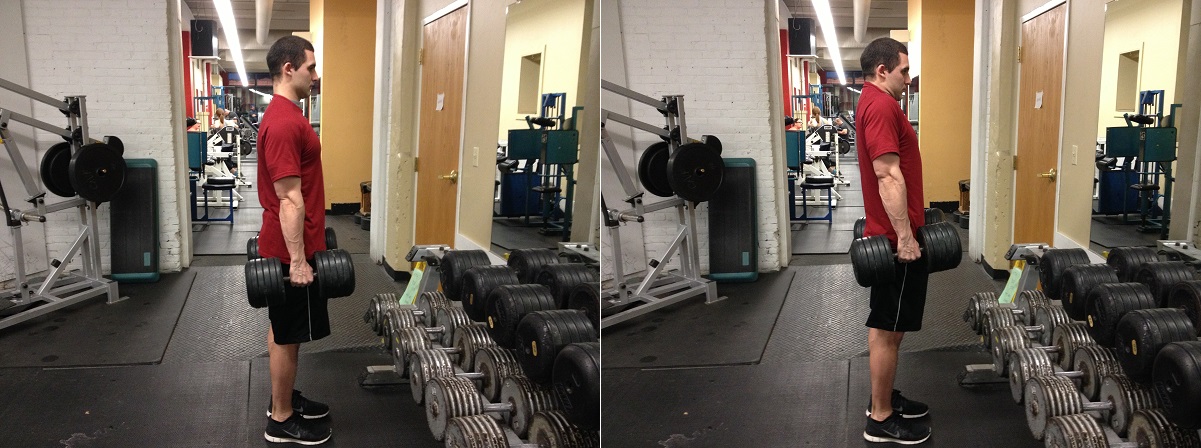
    D4) Shrug variation (Upper traps): (10 reps)

    shurggyys

    Ground rules

    • Perform the recommended amount of reps f0r each exercise.
    • Take minimal to no rest between each exercise.
    • Rest 60 seconds after all 4 exercises are completed.
    • Repeat 1-2 more rounds.

    Finished with day two!

    If you want or need a specific warm up, feel free to do this. It is shown quickly in the video above as well…

    Self massage (5 minutes)

    In general, roll each area for about thirty seconds to two minutes or more. Since I cannot assess you, stay on the areas that need the most work you will stay on the longest. If you have no idea what those are, do this.

    1. Foam Roll Upper Back/Thoracic spine: Or Problem Area #1

    t spine

    2. Foam Roll Lats: Or Problem Area #2

    Foam roll lats

    3. Lacrosse Ball Pecs: Or Problem Area #3

    pecy

    Ultra fast warm up (5 minutes) 

    1. Side lying windmill x7 reps/side

    Side lyng windmill site

    2. Extended or regular front plank to push back x7 reps

    p to p

    3. Band pull aparts x7 reps

    BPAAA

    Also note: With each exercise don’t jump right into the weight you will be working with. Gradually increase the resistance with some “warm up sets” before performing and getting into the “working sets”.

    For example let’s use the seated dumbbell overhead press. Let’s also say you have 4 sets of 8 reps assigned. Start with light dumbbells, then grab heavier ones each set. Once you progress to a weight that is challenging for 6 reps, this would count as your first set. Then you would have three more at that weight according to the above protocol.

    Stay tuned for day three! If you missed day one, GO HERE!

  • The 1-2-3-4 Training Program:  Introduction & Day 1

    The 1-2-3-4 Training Program: Introduction & Day 1

    What you will receive in this article series is…

    • A new six week training program you can use at any point in your training “career”.
    • Picture and video demonstrations of each day/exercise that can be tailored to fit your current level of training.
    • How to fit this to your training schedule whether that be two, three, four or five days a week.

    My programming is always specific to the individual but I figured I would post this to give you a sound, fresh program to follow. Saying this I am going to give you “free will” on some of your exercise choices if you cannot perform the recommended exercise or if you just want to change it up a bit.

    In the 1-2-3-4 training program you will..

    1. Perform one exercise, then rest and repeat until all your sets are completed.
    2.  Perform a superset (two exercises in a row with minimal to no rest in between exercises) and repeat until all your sets are completed.
    3. Perform a tri-set (three exercises in a row with minimal to no rest in between exercises) and repeat until all your sets are completed.
    4. Perform a giant set (four exercises in a row with minimal to no rest in between exercises) and repeat until all your sets are completed.

    Day One: Leg Day/Lower body (Glutes, Hamstrings, Calves)

    A1) Vertical Tuck Jumps: (Explosive)

    Exercise substitutions: Jump variations of any sort (barbell, weighted vest, dumbbell jumps squats, box) etc.

    Tuc jump

    Sets: 5
    Reps: 5
    Rest between sets: 90 seconds

    Perform the exercise above with 90 seconds rest between sets. Repeat until your sets are completed, then move onto the “B” exercises.

    B1) Conventional Deadlift: Glutes & Hamstrings (Strength)

    Exercise substitutions: Any double leg hip dominant exercises. (Conventional, sumo, romanian or any other deadlift variations, glute bridge or hip thrust variations etc.)

    dl sitey

    Sets: 4
    Reps: 5
    Rest between sets: none go right into B2)

    B2) Problem area or hip flexor stretch

    IMG_4672[1]

    Sets: 4
    Reps:  30-60 seconds/side
    Rest between sets: 120-180 seconds

    Perform the “B” exercises above with 120-180 seconds rest between sets. Repeat until your sets are completed, then move onto the “C” exercises.

    C1) Singe leg dumbbell deadlifts: Glutes/Hamstrings (Hypertrophy) 

    Exercise substitutions: Glute ham raise, machine leg curls, cable pull throughs, etc.

    1 leg db dl

    Sets: 3
    Reps: 10-12
    Rest time: none right into C2)

    C2) Standing Palloff Press: Core/Obliques (Anti-rotation)

    Exercise substitutions: Palloff press variations, landmine rotations, cable push/pulls etc.

    pp

    Sets: 3
    Reps: 10-12/side
    Rest time: None right into C3)

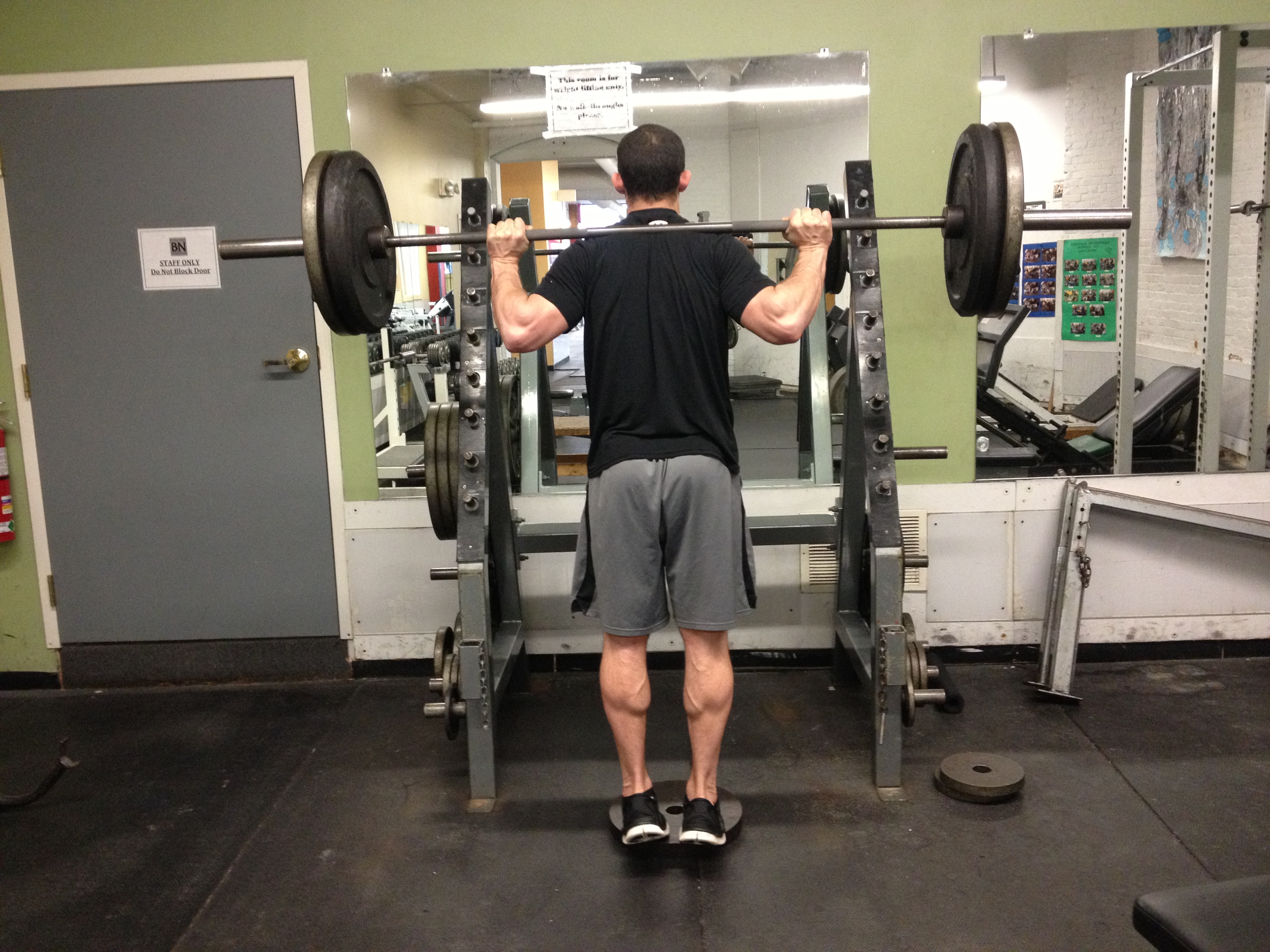
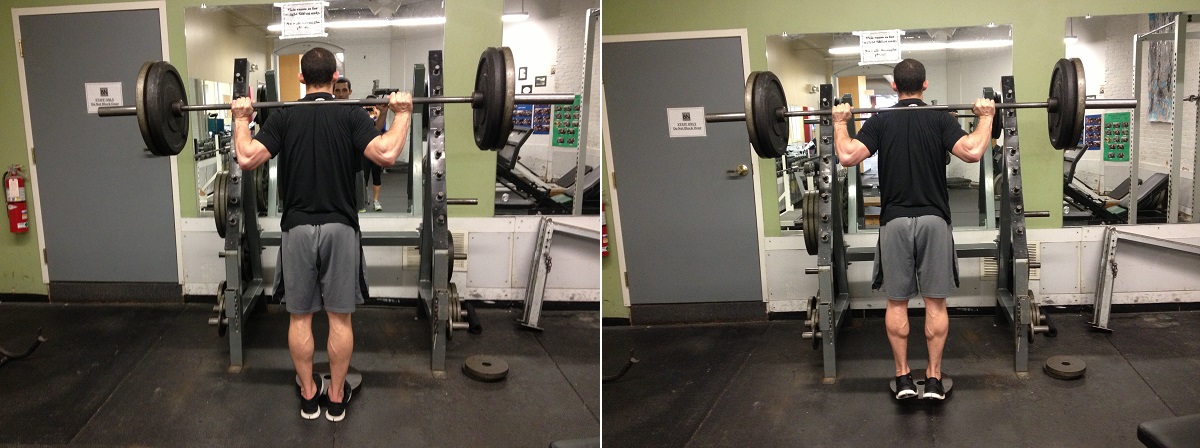
    C3) Standing barbell calf raises: Calves (gastroc)

    Exercise substitutions: Any standing calf raise variation (dumbbell, barbell, machine)

    CR

    Sets: 3
    Reps: 10-12
    Rest time: 120 seconds

    Perform the three  “C” exercises above in succession. Rest 120 seconds and repeat until your sets are completed. Then move onto the “D” exercises.

    (D1-D4)

    *Choose between doing one, two, or all three exercises to finish off day one.

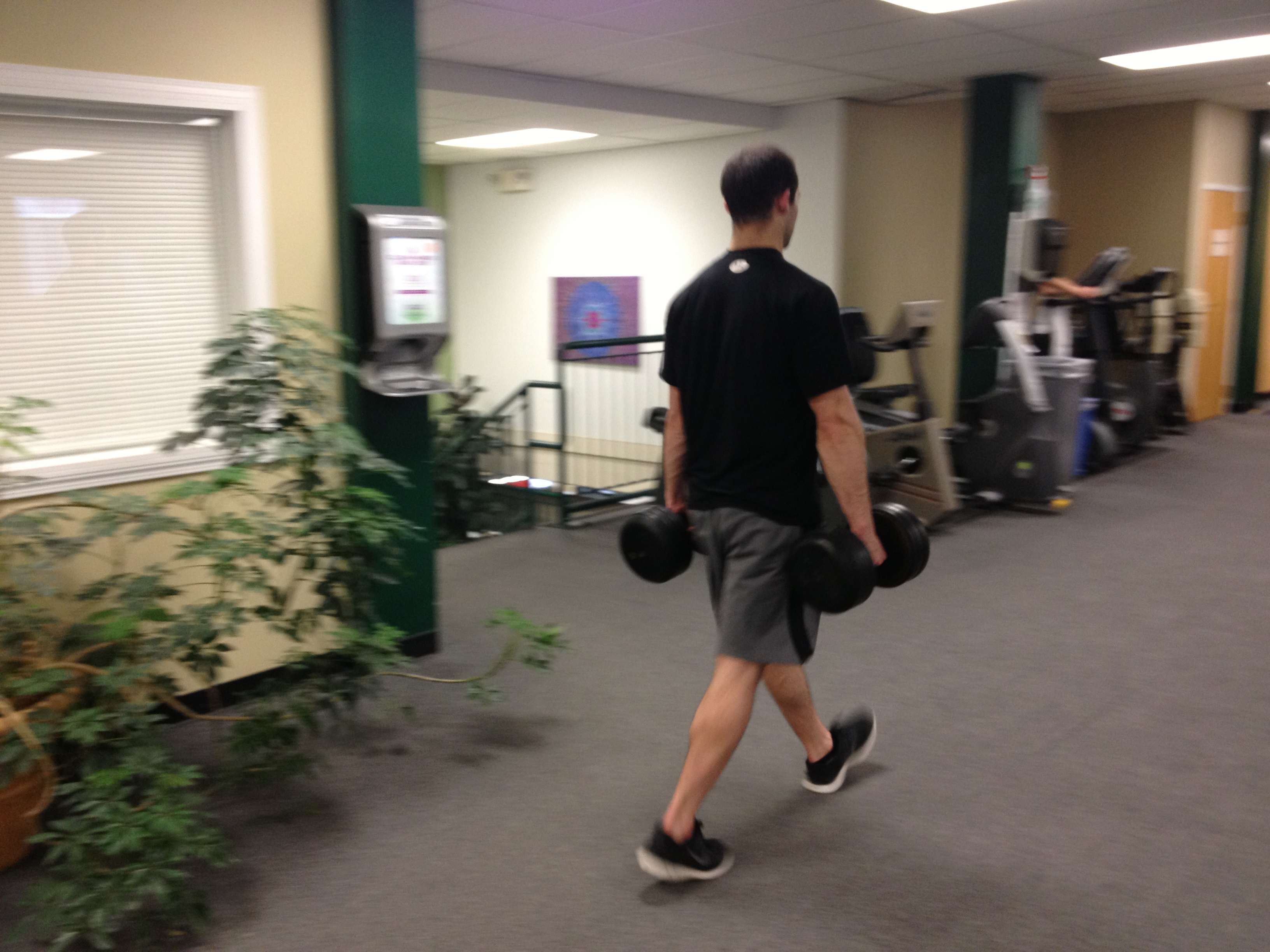
    *D1) Farmer’s walks (1 minute)

    IMG_4692

    *D2) Single leg deadlift variation (left side 1 minute)


    *D3) Single leg deadlift variation (right side 1 minute)


    *D4) Stability ball leg curls (1 minute)

    sb sitey

    *Optional: Choose between doing none, one, two, three or four of the “D” exercises above.

    • Perform the above exercises in a row with minimal rest in between exercises.
    • Complete as many reps as possible in one minute. That’s as fast as you can while keeping good technique and staying under control.
    • Then rest 60 seconds and repeat one to two more times. Once you have finished, you’re done with lower body day two.

    If you want or need a specific warm up, feel free to do this. It is shown quickly in the video…

    Self Massage (5 minutes)

    In general, perform each area for about thirty seconds to two minutes or more. Since I cannot assess you, stay on the areas that need the most work you will stay on the longest. If you have no idea what those are, do this.

    1. Glutes/Hip rotators: Or Problem Area #1

    Glutes Hip rotators

    2. Hamstrings: Or Problem Area #2

    Hamstrings

    3. Hip Flexors/Quadriceps: Or Problem Area #3

    quads

    4. Adductors: Or Problem Area #4

    adductors

    5. Thoracic spine: Or Problem Area #5

    t spine

    Ultra fast Warm Up (5 minutes)

    Lying alternating knee hugs x10/side

    knee hugs pic

    Leg lowering w/band x10/side

    llll

    Three way lunge x7/side

    3 way

     Also note: With each exercise don’t jump right into the weight you will be working with. Gradually increase the resistance with some “warm up sets” before performing getting into the “working sets”.

    For example let’s use the deadlift. Let’s also say you have 4 sets of 5 reps assigned. Start with an empty bar, then add on weight slowly each set. Once you progress to a weight that is challenging for 5 reps, this would count as your first set. Then you would have three more at that weight.

    That’s it! If this article and my youtube video gets at least 300 views I will share the rest. If not I am going to hold off and put the focus on some other articles! Here are what the videos look like I am making to go along with the program if I get a good response!

    Day two is here.
    Here is day three.
    Here is day four.

    http://www.youtube.com/watch?v=6Yqgl7gU6Qk