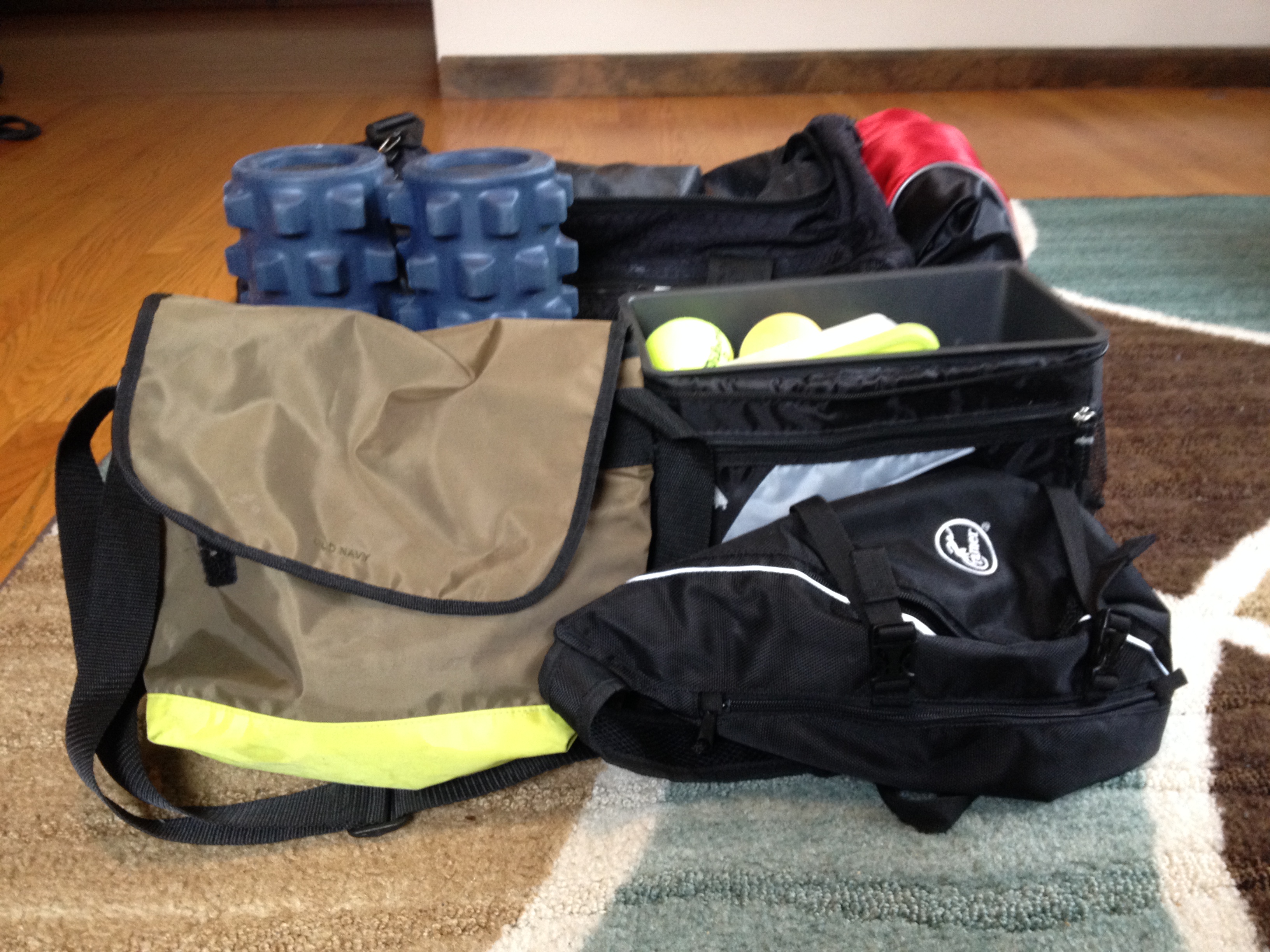
In this article you will learn…
- How to assemble a phenomenal gym bag.
- Why I recommend one.
- A list of items important for you to consider taking with you that you may not have thought of, or needed to be reminded about.
No, you don’t have to carry anything to the place you are training at to feel safe or to have a successful workout. But if you want to be prepared for an emergency situation and or avoid that “I knew I forgot something!” moment it’s a good idea to assemble a gym bag.
As coach and health professional, I believe it is my personal responsibility to be prepared for any situation I can be whether I’m dealing with a client, myself, or anyone else in need of help or assistance. Since I spend so much time working with others, training myself, and seeing so many different people walk in and out gym that I don’t know, I would rather feel confident knowing I have the tools and supplies necessary.
Why is this important??? To start, I have personally seen…
- Some pretty serious acute injuries and open wounds like bloody shins and noses, ripped calluses, bruises, muscle strains, sprains, tears and spasms etc.
- Fainting, low blood sugar, vomiting, extreme dizziness, and nausea etc.
- Bodily fluids on barbells, floors, in bathrooms, locker rooms, and other parts of facilities.
- People urinate in unfavorable places like on couches in the sitting areas.
It’s only the rare cases we cannot help, like the aortic rupture I saw a couple of months ago which requires a phone call for specialized, immediate, professional medical attention. We can’t prevent, treat or stop things like this from getting worse but there are many cases we can. We all know preventing what we are able to is better than having to diagnose or treat an undesirable outcome.
I will not get into training technique, proper nutrition, or any other prevention strategies as this post is strictly about what to put in your gym bag. Take a look below to get an idea of what you might not of thought about or to remind you how awesome a good bank of supplies is. I put things into categories and gave females an extra section. Also note I made this is more for coaches, but I believe everyone should have most of these things available to them at all times.
Gym tools:
- Any special training equipment you wish
- Chalk
- Manual therapy/self-massage stuff (foam rollers, lax balls, tennis balls)
- Monster bands
- Mini bands
- Gloves
- Straps
- Belt
- Stopwatch (on phone hopefully!)
- Training notebook/log (don’t forget pen/pencil etc.)
- Music/headphones
Peri-workout nutrition:
- Extra water bottle
- Extra protein shaker
- Electrolytes
Random:
- Lock
- Gym card if not on keys
- Spare cash
- Phone charger
Hygiene:
- Towels
- Shower shoes
- Deodorant
- Toothbrush
- Toothpaste
- Floss
- Shampoo
- Conditioner
- Body wash
- Shaving cream
- Razor
- Lotion
- Extra pair of clothes
- Etc.
First aid: A first aid kit is great, but if you don’t have one, get things like…
- Elastic bandages in assorted sizes
- Athletic tape
- Gauze
- Paramedic or EMT shears (scissors)
- Adhesive tape
- Oral thermometer
- Sterile surgical gloves (also bring non latex, synthetic, nonpermeable gloves for those that may be allergic)
- Glutose (oral liquid glucose) paste tube to treat a hypoglycemic or low blood sugar reaction
- Electrolytes
- Epi-pen
- Sterile eye wash
- Any special eye medications and dressings for those that wear contacts
Extra for females:
- Hair brush
- Makeup bag
- Tampons/pads
- Straightener or curling iron
- Sports bra
- Hair ties
Even with all of this “stuff”, it fits really nicely when you know how to put a gym bag together. Take a look at mine and see what I mean…
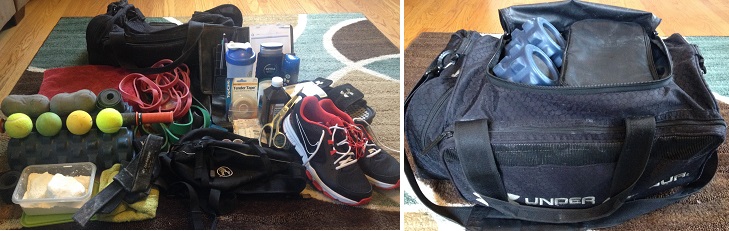
To get your bag looking like mine:), a few extra tips that are extremely simple and helpful to keep your bag neat and clean avoiding a dirty, smelly, disaster include…
1. Buy a bag you can wash and that is big enough to hold what you need.
2. Use smaller bags (I use lunch bags etc.), a shower caddy, and things like toothbrush holders as mini organizers.
3. Keep your bag in your trunk, office or wherever will allow you to just up and go.
4. Purchase separate or smaller size items to store in your bag so you don’t have to take them in and out every time you go to the gym.
While it’s not mandatory, it is very useful to have access to the tools you need, or to even be prepared for a potentially harmful situation while undergoing any type of training or physical activity. I don’t just recommend this post for trainers, coaches of sports teams, or for the average gym goer, but to everyone and anyone. Extra supplies can only help you have a more safe, effective, and successful training session.


Leave a Reply