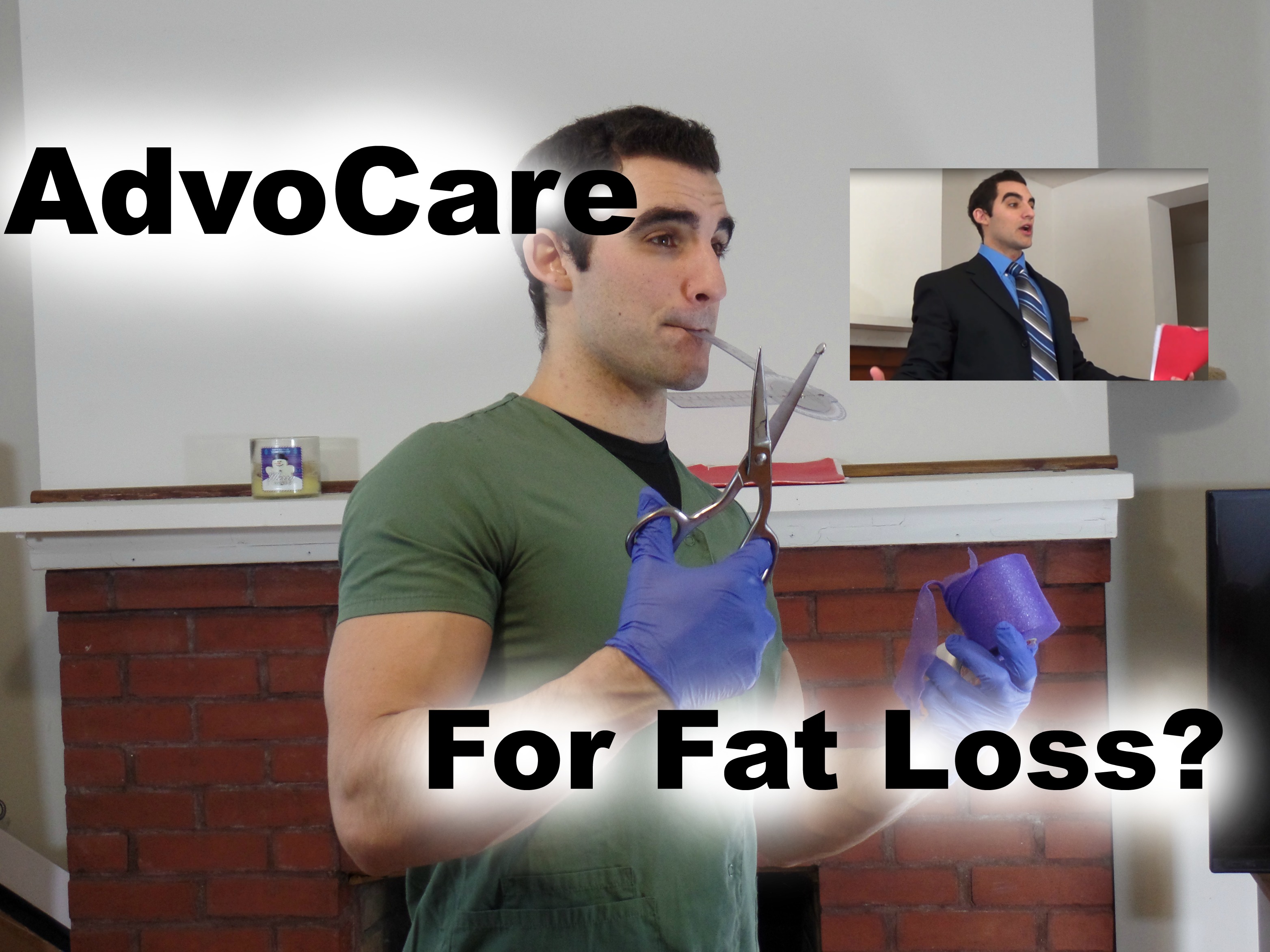
I wanted to make this video skit for a while now, as I’ve received a lot of questions about AdvoCare lately. I’ll probably lose about 100 Facebook friends after this post, but you deserve to know the truth. If you have any questions at all, I will respond to you specifically. Thanks for watching!
Also, I JUST GOT SNAPCHAT! @ justinrivelli I’m delivering the most fitness value I can on the platform. Add me there for fresh, new, content. Feel free to check out my other social media platforms as I post a ton of information there as well.
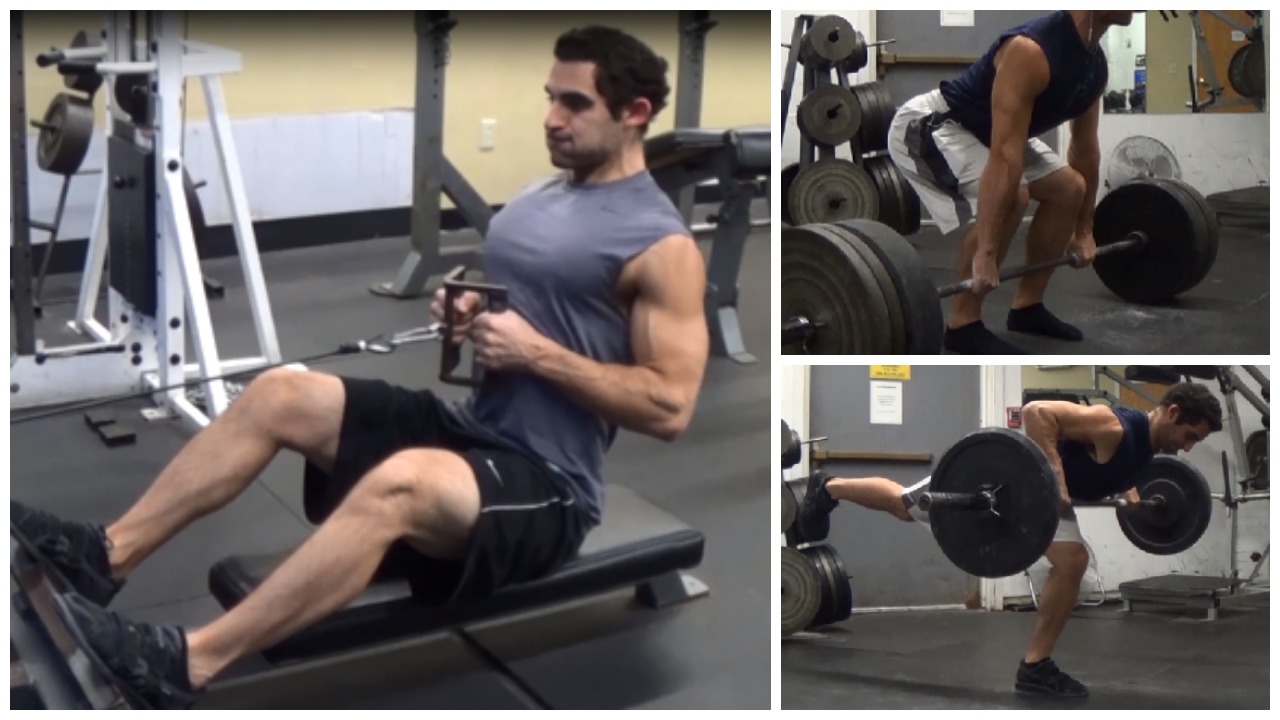
What’s up everyone?! While I’m working on some new video skits and other content I’ll be releasing soon, I figured I would post my last week of training before 2016. The full program is below, but as always if you have any questions, I will respond to you specifically on my YouTube channel or Facebook page. Thanks for watching!
Training Schedule:
Day One: Lower Body One
Day Two: Upper Body One
Day Three: Off/Conditioning
Day Four: Lower Body Two
Day Five: Off/Conditioning
Day Six: Upper Body Two
Day Seven: Off/Conditioning
Lower Body Day One:
A) Front Squats
Sets: 4
Reps: 4
Rest time between sets: 120-180 seconds
B) Hanging Plate Rear Leg Elevated Split Squats
Sets: 3
Reps: 8-10/side
Rest time between sets: 120 seconds
C) Prone Hamstring Curls
Sets: 3
Reps: 10-15
Rest time between sets: 60-90 seconds
D) Standing Barbell Calf Raises
Sets: 3
Reps: 10-15
Rest time between sets: 60-90
E) Half Kneeling Cable Lifts
Sets: 3
Reps: 12/side
Rest time between sets: 60-90 seconds
F) Ab Wheel Rollouts
Sets: 3
Reps: 8-15
Rest time between sets: 60-90 seconds
Upper Body Day One:
A) Incline Bench Press
Sets: 4
Reps: 5
Rest time between sets: 120-180 seconds
B) Flat Barbell Bench Press
Sets: 3
Reps: 8-10
Rest time between sets: 120 seconds
C) Neutral Grip Pull Ups
Sets: 3
Reps: 6-10
Rest time between sets: 90-120 seconds
D) Seated Cable Rows
Sets: 3
Reps: 10-12
Rest time between sets: 90 seconds
E1) Face Pulls
Sets: 1
Reps: 20
Rest time between sets: minimal to none, right into E2)
E2) Push Ups (Add Extra Resistance If Needed)
Sets: 1
Reps: 20
Rest time between sets: 120 seconds, then into F)
F) Hammer Curls
Sets: 3
Reps: 6-10/side
Rest time between sets: 60-90 seconds
Lower Body Day Two:
A) Power Clean
Sets: 3
Reps: 3
Rest time between sets: 180 seconds
B) Conventional Deadlift
Sets: 3
Reps: 6
Rest time between sets: 120-180 seconds
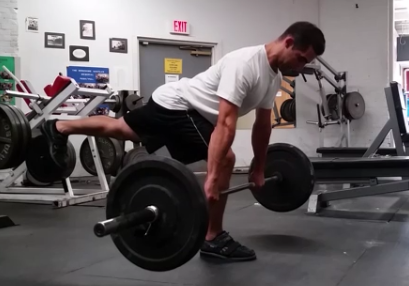
C) Single Leg Barbell Deadlift To Single Leg Barbell Row (3×3+3)
Sets: 3
Reps: 3+3/side
Rest time between sets: 90-120 seconds
D) Split Stance Cable Lifts
Sets: 3
Reps: 8/side
Rest time between sets: 120-180 seconds
Upper Body Day Two:
A) Standing Barbell Overhead Press
Sets: 4
Reps: 4
Rest time between sets: 120-180 seconds
B) Hanging Plate Push Press W/ Slow Eccentric
Sets: 3
Reps: 3
Rest time between sets: 120 seconds
C) Side Raises With Dumbbells
Sets: 3
Reps: 10
Rest time between sets: 60 seconds
D) Rear Deltoid Raises With Dumbbells
Sets: 3
Reps: 15
Rest time between sets: 45-60 seconds
E1) Standing Biceps Curls
Sets: 3
Reps: 6-10
Rest time between sets: Minimal to none, right into E2)
E2) Cambered Bar Skull Crushers
Sets: 3
Reps: 6-10
Rest time between sets: 60-90 seconds
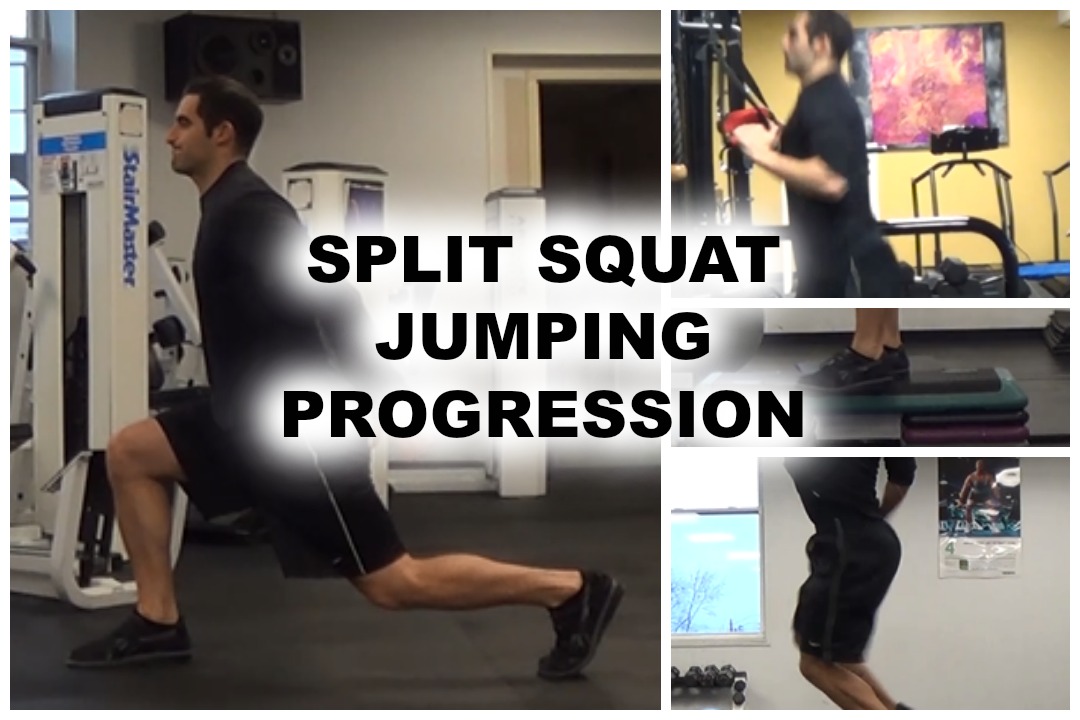
Here’s a bodyweight split squat jumping progression you can use no matter what “fitness level” you’re at. The exercises are in order from least to most challenging. If you have any questions AT ALL, leave them below and I will respond as soon as possible to each and every one of you. Thanks for watching!
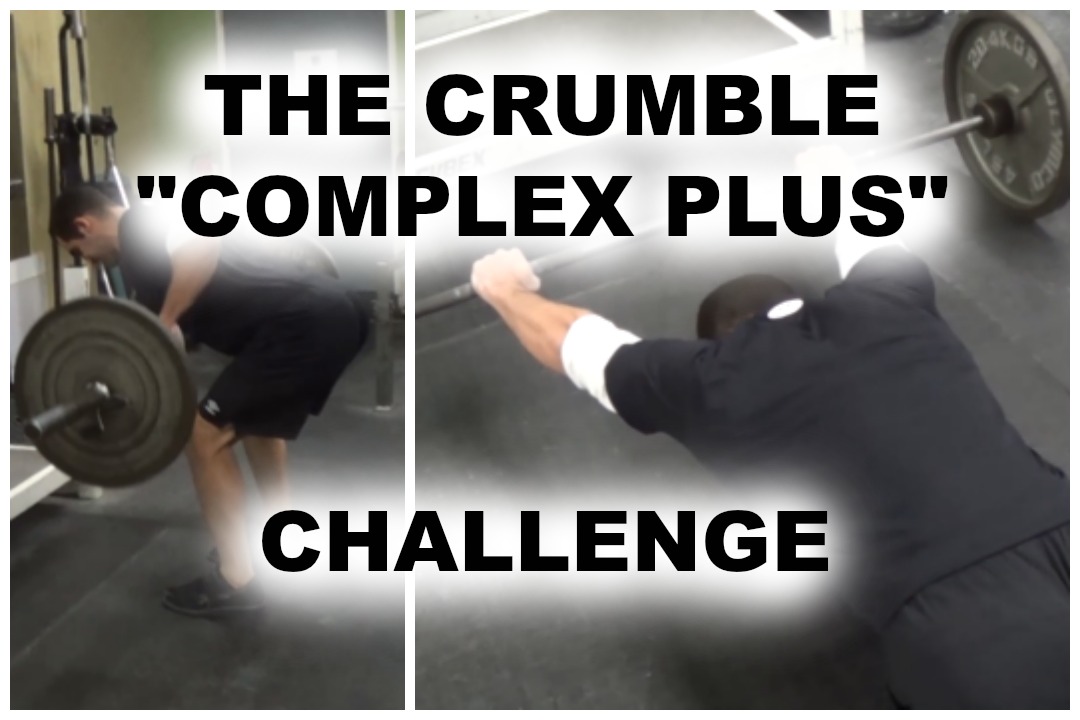
Technically a complex is a series of movements performed without putting the bar down. Therefore, I called this “The Crumble Complex Plus” challenge, for a couple reasons.
One is, because even though you’ll never let go of the barbell in this challenge, you do put it down, hence the “plus” portion of the title. The second and last reason is, because not only to the reps diminish each round, but your energy starts to deteriorate as well. Which is why the word crumble is in there.
CHALLENGE/THE GOAL:
If you’re a female try to complete this using 75 lbs. If you’re a male, try to complete this using 135 lbs.
THE EXERCISES:
A1) Front loaded alternating reverse lunges
A2) Bent over row
A3) Romanian deadlift
A4) Push ups
A5) Barbell rollouts
ROUNDS AND REPS:
First round: 5 reps per movement.
Second round: 4 reps per movement.
Third round: 3 reps per movement.
Fourth round: 2 reps per movement.
Fifth round: 1 rep per movement.
Total reps: 90
REST TIME:
Try to do this entire complex without stopping. With that said, take minimal to no rest between exercises, reps or rounds.
GROUND RULES:
Do not take your hands off the bar.
Use full range of motion and good technique with every movement.
If using single leg exercises, perform the number of reps listed for each side. For example, if you’re doing alternating lunges x 5, perform five reps per leg, not five reps total.
Again, the goal is to perform this entire complex without stopping. Take minimal to no rest between exercises, reps, or rounds.
HERE’S THE TEMPLATE IN CASE YOU WANT TO ADJUST IT (REGRESS, LATERALIZE, OR PROGRESSTHIS) ACCORDING TO YOUR SPECIFIC NEED AND WANTS:
A1) Knee dominant (any variation of squats, split squats, lunges, etc.)
A2) Upper body pull (any variation of rows, etc.)
A3) Hip hinge (any variation of deadlifts or single leg deadlifts, etc.)
A4) Upper body pushing exercise (any variations of overhead, bench, or floor presses)
A5) Carry or core exercise (any carry or core exercise)
WHY I LIKE THIS:
It hits five major movement patterns.
It alternates between upper and lower body.
It feels smooth, natural, and fluid.
MAKE THIS YOUR OWN:
Try this both with ascending reps per round (1-2-3-4-5) and descending reps per round (5-4-3-2-1) as shown in the video.
Like shown in the template, the exercises can change, as well as the devices you use (barbell, dumbbell, trap bar, landmine, etc.)
You don’t need to follow this order.
IMPORTANT NOTES:
Use chalk. The bar will most likely get slippery from sweating.
Use full range of motion on everything.
Clients seem to fatigue in different areas of the body ranging from core, to upper back, to their grip and more.
ENDING NOTES:
The exercise selection, resistance used, and the like, will be dependent upon the individual. If you can do another round, you didn’t use enough weight.
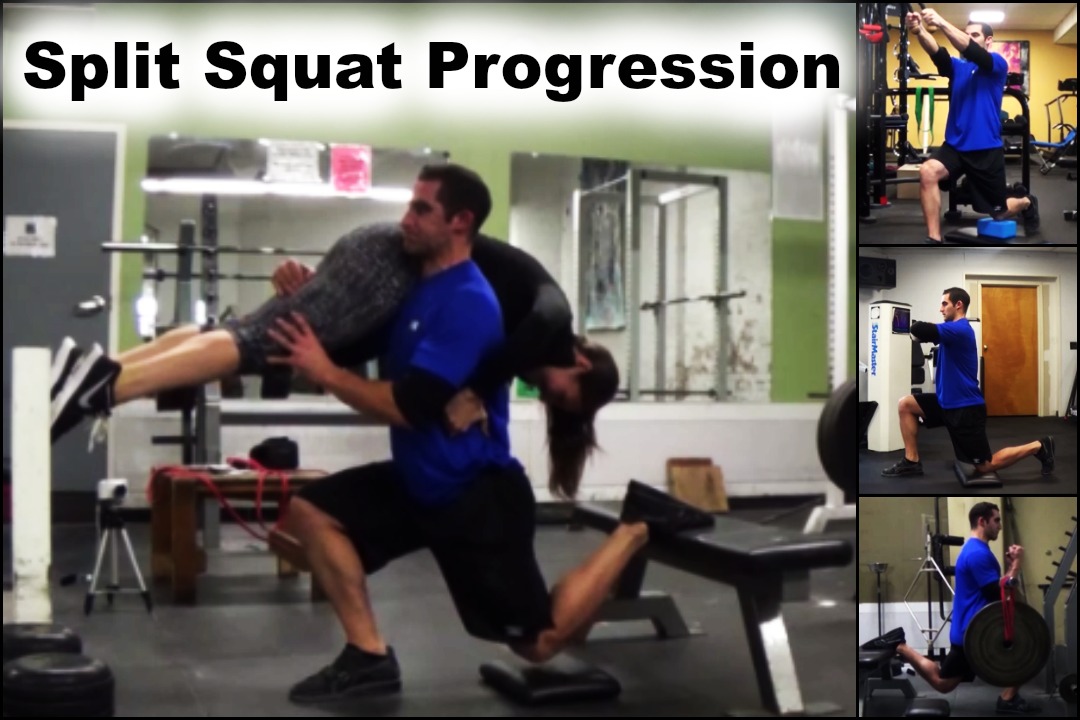
In this video you’ll be taken on a journey through the wonderful world of split squats. You’ll arrive at one of the least difficult variations, and depart with one of the most challenging. I also threw in a bunch of other options at the end as well.
Since this film consists of over seventy different variations, you’ll be guided by the delicate articulation and powerful energy of the hang percussion instrument. So sit back, relax, and enjoy. If you learned something new, I’m happy. If this got you thinking, I’m happier:)
Don’t limit yourself to the progressions, variations, exercises used, or even the length of the stride or tempos shown in this video. If you have any questions leave them below and I’ll respond as soon as possible. Also I really appreciate the likes shares and subscribes. Thank you for watching!
P.S. What was your favorite variation? Let me know in the comments below or on YouTube!
Since it’s starting to get cold out, it might be time for you to consider executing a general warm up before your training sessions. If you’re not currently using one, or are unsure of what to do, I’ve created a video for you, that also focuses on some of the most common problem areas I see on a daily basis.
A well structured warm up can help you:
1. Improve upon the mobility of and prepare, both the joints and muscles you’re going to train.
2. Increase your central nervous system activity. (this coordinates and influences the activity of all parts of the body)
3. Psychologically allows you to prepare for the training ahead, without generating unnecessary fatigue.
Notes:
You can perform this after your workout, everyday, or whenever you choose. It doesn’t have to be looked at as solely a warm up routine.
A general warm up (like the video below) can help prepare you for a more specific warm up, or the sets you perform before the exercise you’re using, usually with progressively heavier weight.
Everyone has different goals and training programs, along with varying amounts of mobility, strength, experience and other unique needs and wants. While the structure of this warm up will be beneficial to many people, it may not be optimal for others. However it should serve as a valuable structure for many.
Let me know if you have any comments or questions at all, and I will answer you specifically. Thank you for watching!
Should you eat multiple meals a day for body fat reduction? In this video I tackle the myths surrounding metabolic rate, starvation mode, and hunger, and then provide you with an experience driven (personal and coaching), evidence based, solution to this problem.
Warning: This video contains science, bloopers, and acting. Any questions after watching the video will be answered on my YouTube channel or Facebook page.
Since I’ve been staying more up to date with Youtube, Instagram, and Facebook posts, I figured I would start placing that exact content here as well. The reason for this, is that I believe will be of great value to you. Any questions, concerns, or comments just ask and I’ll get back to you as soon as possible.
A1) Goblet squats: Great for teaching and grooving good squat technique, while at the same time delivering a training effect to the quadriceps, core, and upper back.
A2) Prone scapular swimmers: For improved mobility, articular strength, and neurological control. “In the process of developing mobility, all articular connective tissue components are strengthened, and neurological control of said tissues enhanced. These are two factors well known in the scientific literature to enhance joint health, prevent injury, and improve longevity”. – Dr Andreo Spina. For more information about these principles check out @drandreospina.
A3) Single arm cable rows: Used for general upper body pulling/back strength, and for training things like the lats, rhomboids, and lower and middle traps.
B1) Kettlebell deadlifts: To engrain the hip hinge pattern, improve hip extensor strength, and to further develop the glutes, hamstrings, and lower back.
B2) Push ups: To develop upper body strength while integrating the core and lower body.
C1) Plate push conditioning circuit: To improve total body conditioning, endurance, and to increase mental toughness while pushing from a plank position.
I decided to take a different approach to get my point across with this video. If you like it, let me know on my YouTube channel or Facebook page. I hope you laugh, learn, and get thinking because of this film. I appreciate you watching!